
Think of a disclosure statement as the property’s uncensored tell-all biography. It’s the seller’s legally required confession of everything they know about the home’s condition—from that pesky leaky faucet in the guest bath to a long-forgotten pest problem in the attic. This document isn’t just paperwork; it’s the foundation of a transparent, honest real estate deal.
What Exactly Is a Disclosure Statement?
The easiest way to understand a disclosure statement is to compare it to the CarFax report you’d pull before buying a used car. That report lays out the vehicle’s entire history—accidents, maintenance records, title issues—so you know exactly what you’re getting into. A property disclosure statement does the same thing for a house.
Its entire purpose is to arm you, the buyer, with critical knowledge and prevent any nasty surprises after you’ve got the keys. This isn’t just a courtesy from the seller; it’s a legal requirement designed to level the playing field and make sure you have the same information they do about the property’s true condition.

Why It’s the Bedrock of Trust
In a market as dynamic as Los Angeles, trust is everything. A thorough and honest disclosure statement builds that trust from the very beginning. It signals that the seller is operating in good faith, not trying to hide a problem that could become your financial nightmare down the road.
For buyers, this document is an absolutely essential part of your due diligence. It helps you:
- Spot potential deal-breakers early in the process.
- Get a clear picture of what repairs or upgrades might be on the horizon.
- Factor those potential costs into your budget and your offer.
- Ultimately, make a final decision with confidence, not fear.
To give you a quick snapshot, here’s a breakdown of what you’ll typically find in a disclosure statement.
Disclosure Statement at a Glance
| Component | What It Covers | Why It Matters to You |
|---|---|---|
| Property Condition | Details on the roof, foundation, plumbing, electrical, and HVAC systems. Known issues like leaks or structural defects are listed here. | This is your roadmap for potential big-ticket repairs. A new roof or foundation work can cost tens of thousands. |
| Appliances & Fixtures | The condition of included items like the oven, dishwasher, and water heater. It also covers things like smoke detectors and security systems. | Helps you budget for replacements and understand what comes with the house versus what you’ll need to buy. |
| Environmental Hazards | Presence of lead-based paint, asbestos, radon, or mold. It also includes proximity to flood zones, earthquake faults, or fire hazard areas. | These are major health and safety concerns that can impact insurance costs and your family’s well-being. |
| Legal & Title Issues | Any known property line disputes, homeowner’s association (HOA) rules, or unpermitted work. | Unpermitted additions can be a nightmare to legalize, and HOA disputes can lead to fines or legal battles. |
| Pest & Water Damage | History of termites, rodents, or other infestations. It also discloses any past water intrusion or flood damage. | Past damage can indicate underlying issues that may reappear, requiring costly remediation. |
This table just scratches the surface, but it shows how disclosures empower you to look beyond the fresh paint and staging.
Ultimately, the disclosure statement is your first line of defense against the unknown. It transforms a potentially risky investment into a calculated one, allowing you to move forward with clarity and peace of mind. To see how transparency plays out in other real estate documents, you might also want to understand the role of a property management agreement.
A strong disclosure statement isn’t just about listing flaws; it’s about creating a transparent transaction where both parties feel secure. It’s the difference between buying a property and truly investing in a home.
By demystifying a property’s past, disclosures make sure there are no secrets hiding in the walls. This process is absolutely fundamental to a fair and successful real estate transaction, laying the groundwork for a positive experience for everyone involved. Without it, you’re just buying blind.
How Disclosures Build Trust and Property Value
A disclosure statement isn’t just another legal hurdle to clear or a box to tick. It’s one of the most powerful tools in any real estate deal—the very foundation of trust between a buyer and a seller. Before disclosures became the norm, buying a home was a total gamble.
Buyers had to make one of the biggest financial decisions of their lives with almost no real information. Economists have a term for this: “information asymmetry.” It just means the seller knew everything about the leaky faucet in the guest bath and the crack in the foundation, while the buyer knew nothing. That fear forced buyers to lowball their offers to hedge against unknown problems, which dragged down property values for everyone.
California’s Groundbreaking Role in Transparency
California changed the entire game back in the late 1980s. It was the first state in the country to mandate the Real Estate Transfer Disclosure Statement (TDS), a move that completely leveled the playing field. This wasn’t a suggestion; it was a legal requirement for sellers to put all their cards on the table and reveal any known “material facts”—the kind of significant issues that would make a buyer think twice.
The industry shifted from a “buyer beware” free-for-all to a system of mandated transparency, and the impact was massive. All of a sudden, buyers could walk into a negotiation with a clear picture of what they were actually buying. This newfound confidence did more than just calm nerves; it fixed broken market dynamics.
When you remove the guesswork, buyers can make stronger, more competitive offers. They’re no longer bidding on a mystery box. They’re bidding on a home with a documented history, and that’s a much more valuable proposition.
This transparency has a direct, measurable financial upside. Studies have shown that sellers who provide these state-required disclosure statements can fetch a 3-4% higher price for their homes. That simple act of honesty gets rid of the “cost of uncertainty” that used to make buyers so cautious.
Turning Disclosures into a Strategic Advantage
In a market as intense as Los Angeles, a thorough disclosure packet is a seller’s secret weapon. This isn’t about airing your home’s dirty laundry. It’s about demonstrating your integrity and proving the property’s true, transparent value.
For a seller, a well-prepared disclosure packet does three crucial things:
- Builds Immediate Credibility: It signals to buyers that you have nothing to hide. That first impression creates a positive, trustworthy vibe from the get-go.
- Minimizes Renegotiations: When problems are disclosed upfront, there are no ugly surprises during the inspection. That means a much smoother path to the closing table.
- Reduces Legal Risk: Honesty is your defense. A complete disclosure protects you from future lawsuits from a buyer claiming you kept them in the dark about a known issue.
For a buyer, the disclosure statement is your roadmap for due diligence. It’s the starting point for your own investigation, telling you and your home inspector exactly where to look closer. A detailed disclosure empowers you to make a decision with your eyes wide open, fully understanding the home’s strengths and weaknesses. This whole process is fundamental to getting the deal done, which is all locked in with the final paperwork. If you want to get a jump on that, check out our guide on what is a purchase and sale agreement.
At the end of the day, a disclosure statement does more than just list facts. It transforms a transaction from a risky gamble into a transparent partnership where both parties are on equal footing. That foundation of trust doesn’t just make for a cleaner sale—it helps maintain and even boost property values for the entire community.
Navigating Key California Disclosure Forms
When you first see the stack of disclosure documents, it can feel like you’re prepping for a final exam you didn’t study for. Don’t worry. In California, it all really comes down to a few key forms. Let’s call them the “Big Three” of real estate paperwork—each one designed to tell a crucial part of the property’s story.
Getting a handle on these forms is how the concept of a disclosure statement stops being a dry legal requirement and starts being a practical tool that protects your investment, whether you’re buying or selling.
The Transfer Disclosure Statement (TDS)
First up is the Transfer Disclosure Statement (TDS). This is the OG, the form that started it all. It’s the state-mandated document where sellers must officially list any major defects or problems they know about. We’re talking about everything from the foundation and roof to the plumbing and electrical systems.
The TDS isn’t a warranty; it’s a statement of what the seller knows. They fill it out to the best of their ability, checking boxes and writing explanations for any issues they’re aware of. For a buyer, this is your first official alert about potential problems that need a much closer look during your inspections.
The Seller Property Questionnaire (SPQ)
If the TDS is the baseline requirement, think of the Seller Property Questionnaire (SPQ) as the deep-dive interview. This form goes way beyond the basics, asking more detailed questions to paint a full picture of the property’s history. It’s designed to jog the seller’s memory about things that might otherwise slip through the cracks.
The SPQ covers things like:
- Past insurance claims or major repairs
- Neighborhood noise or other nuisances
- Any work done without permits
- Disputes with neighbors over fences or property lines
This is often where the real story comes out. A “yes” answer on the SPQ doesn’t mean you should bail on the deal, but it is a giant red flag telling you to start asking more questions and dig deeper.
The Natural Hazard Disclosure (NHD) Report
Welcome to California, where the beautiful weather comes with a side of geological drama. The Natural Hazard Disclosure (NHD) Report is prepared by a third-party company and tells you if the property sits in any officially mapped hazard zones.
This isn’t about the seller’s opinion—it’s based on hard government data. The NHD will tell you if the home is in an area with a high risk of:
- Earthquakes (specifically, a fault zone)
- Flooding (a designated flood plain)
- Wildfires (a high fire hazard severity zone)
- Landslides (a potential liquefaction zone)
Knowing a home’s hazard status is absolutely critical. It can impact your ability to get homeowners insurance, change what you can do with the property, and most importantly, affect your safety. A clean NHD gives you the facts you need to weigh the environmental risks that come with the location.
A complete set of disclosures isn’t about scaring buyers away; it’s about setting clear expectations. It’s the ultimate act of transparency that says, “Here’s everything I know, so you can make a decision you’re confident in.”
These three documents are designed to work together, giving you a 360-degree view of the property: the seller’s direct knowledge, their detailed memories, and objective, data-driven hazard information.
This transparency is what builds trust and creates real value in a deal.
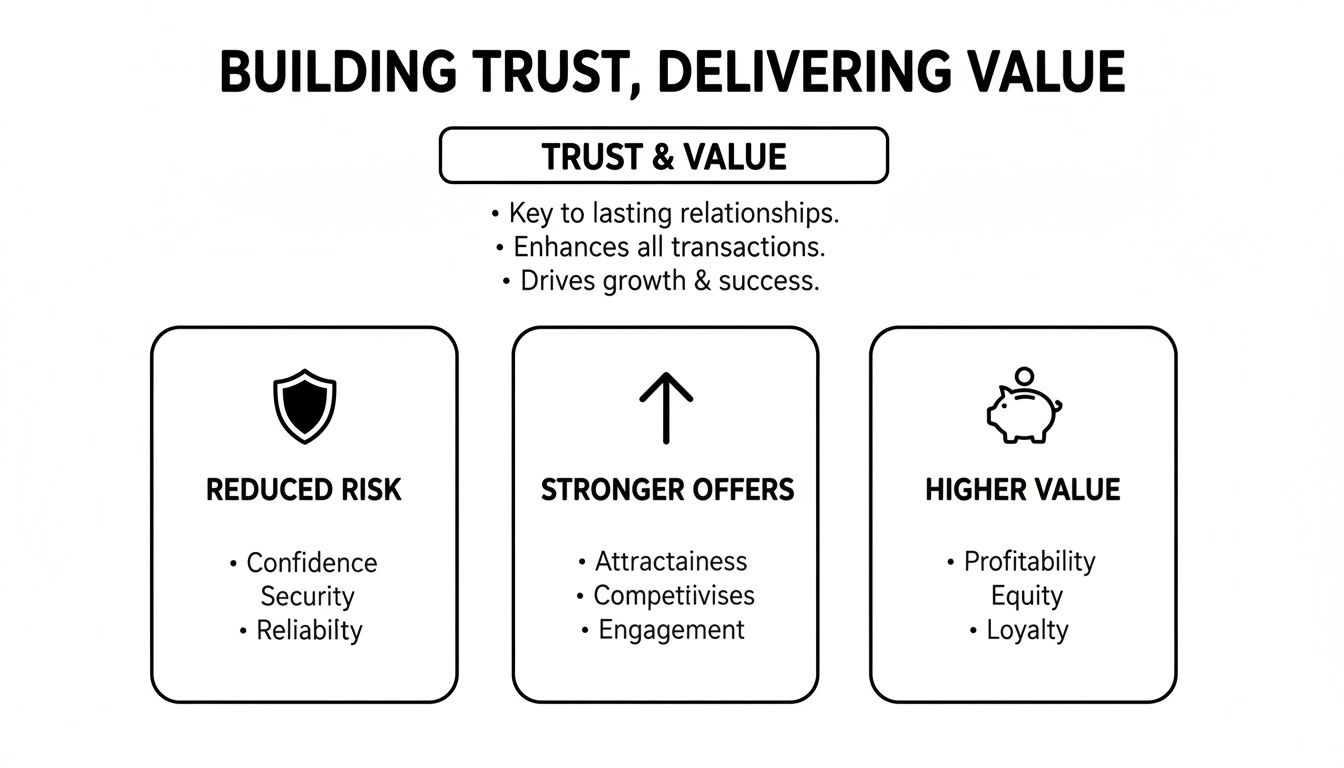
When sellers are honest, buyers can reduce their risk. That allows them to make stronger, more confident offers, which ultimately leads to higher and more stable property values for everyone.
To make sense of how these documents fit together, here’s a quick breakdown of the essential forms you’ll see in a California transaction.
Essential California Disclosure Forms Compared
| Disclosure Form | Primary Purpose | Key Information Included |
|---|---|---|
| Transfer Disclosure Statement (TDS) | To disclose known material defects with the property’s main systems and structure. | Leaky roofs, faulty plumbing, broken appliances, foundation issues, electrical problems. |
| Seller Property Questionnaire (SPQ) | To provide a more detailed history of the property beyond just defects. | Past repairs, neighbor disputes, unpermitted work, insurance claims, neighborhood nuisances. |
| Natural Hazard Disclosure (NHD) Report | To identify if the property is in a state-designated natural hazard zone. | Earthquake fault zones, flood plains, high fire severity areas, landslide risk zones. |
Seeing them side-by-side makes it clear: the TDS is about the what, the SPQ is about the why and how, and the NHD is about the where. Together, they provide a powerful, multi-layered view of the property you’re considering.
Other Important California Disclosures
Beyond the Big Three, a few other forms will likely cross your desk. A Lead-Based Paint Disclosure is a federal requirement for any home built before 1978, informing buyers about any known lead paint hazards. If the property is in a Mello-Roos district, another disclosure will spell out the special taxes used to pay for local infrastructure. The legal framework can get complicated, and for those who want a deeper understanding, it’s worth reviewing the landlord-tenant laws in California.
Each form adds another layer to the story. It’s a lot like reviewing a home’s chain of ownership in a title report—you’re piecing together the complete history. To see how that process works in parallel, check out our guide on what is a preliminary title report. Your agent is your guide through this, making sure you understand every page and what it means for you and your money.
Understanding Your Role in the Disclosure Process
Real estate disclosures aren’t some kind of confrontation. It’s more like a carefully choreographed dance where both the buyer and seller have critical parts to play. Think of it like a relay race: the seller starts with the baton full of information, and the buyer has to grab it and run their own leg of the race through due diligence. When both sides nail their roles, the transaction sails smoothly to the finish line.
The Seller’s Duty: Honesty Is Your Only Policy
If you’re the seller, you’re the keeper of the property’s history. You have a legal and ethical duty to be an open book about any “material facts”—basically, anything significant that could make a buyer think twice or change the home’s value. This is absolutely not the time to be shy or hope a problem flies under the radar.
Your job is to be brutally honest and thorough when you fill out forms like the Transfer Disclosure Statement (TDS) and Seller Property Questionnaire (SPQ). The golden rule is simple: when in doubt, disclose it. That tiny drip under the sink you “fixed” yourself with a wrench? Disclose it. The time the washing machine flooded the laundry room five years ago? Put it down.
Trying to hide a known problem is a high-stakes gamble with absolutely terrible odds. Picture this: a seller knows about a seasonal leak in their basement. Instead of fixing it, they slap a coat of paint over the water stain and stay quiet. The house sells in the middle of a dry summer. Six months later, the winter rains come, and the new owner’s basement floods, destroying furniture and revealing the old cover-up.
That new homeowner isn’t just dealing with a mess; they’re calling a lawyer. The seller is now staring down a lawsuit for fraud and non-disclosure, potentially costing them tens of thousands in damages and legal fees—way more than the original repair ever would have.
The point of a seller’s disclosure isn’t just to check a legal box; it’s to transfer knowledge. Being transparent protects you from getting sued down the road and builds the trust you need for a clean, successful sale.
The Buyer’s Responsibility: Trust, But Verify
Alright buyers, your role is just as crucial. The seller’s disclosures are your starting point, not the final word. It’s a roadmap handed to you by someone who, let’s be honest, really wants to sell their house. Your job is to take that map and check every single route yourself.
This investigation is called due diligence, and it’s your primary mission. Don’t just skim the documents; read every single line. If a seller notes a “minor plumbing issue” in the master bath, that’s your cue to ask sharp questions and tell your home inspector to zero in on that area.
Your due diligence should absolutely include:
- A Deep Dive into the Docs: Go through the TDS, SPQ, and NHD with your agent. Highlight anything that feels vague, concerning, or glossed over.
- Asking Follow-Up Questions: Never hesitate to ask for more information. “Can you show me the receipts for that roof repair you mentioned?” is a perfectly reasonable and important question.
- Hiring the Pros: A general home inspection is completely non-negotiable. And depending on what the disclosures uncover, you might need to call in specialists—a roofer, a structural engineer, a pest control expert. You name it.
The seller’s job is to tell you what they know. Your job is to investigate what they might not know or what they might have downplayed. Taking this responsibility seriously is the single best way to protect your investment. Working with a skilled real estate agent is vital here, as they act as your chief investigator, helping you ask the right questions and connect with trusted professionals.
At the end of the day, a drama-free closing happens when both parties fully embrace their roles—the seller as the honest historian, and the buyer as the diligent detective.
How LA Real Estate Fits into Global Transparency Trends
It’s easy to look at a disclosure statement as just another piece of local LA paperwork—a thick stack of forms you have to get through for your deal in the Valley or West LA. But that stack of papers connects you to a much bigger conversation about global trust, investment, and market stability. The tough standards we have here in California aren’t just some regional quirk; they’re a huge reason why the U.S. is seen as a top-tier, trustworthy place to buy property on the world stage.
This isn’t just some feel-good idea about transparency. It’s a real economic force. When international investors are looking for stable markets to park their money, they’re hunting for places with clear rules and few surprises. A market where sellers are legally required to disclose known issues is infinitely more attractive than one where “buyer beware” is the law of the land.
The Global Stage for Real Estate Transparency
To really get this, you have to zoom out and see how global markets are judged. Think of it like a credit score for a country’s real estate market. One of the most respected benchmarks is JLL’s Global Real Estate Transparency Index (GRETI), which ranks markets on things like governance, regulation, and how available data is. It basically tells investors which markets are open, honest, and reliable.
For any savvy LA investor or homeowner, understanding this context is a game-changer. The 2024 GRETI report shows how disclosure statements are fundamentally changing real estate transparency across the globe. The United States, along with places like Canada, France, and Australia, were named top global improvers, climbing the ranks because of strong disclosure rules in both residential and commercial deals. This reputation for being a “highly transparent” market isn’t just a fancy title; it’s a magnet for foreign investment, which helps keep our local market dynamic and resilient. You can explore the full findings on global market transparency from JLL’s research.
This means your local disclosure process isn’t just about protecting one deal. It’s a small but vital part of a massive system that builds international confidence and keeps capital flowing into our communities.
This global reputation directly benefits every single homeowner and buyer in Los Angeles. It adds to market stability, supports property values, and makes sure the rules of the game are clear for everyone. It’s a powerful reminder that our local practices are part of a global standard of excellence.
Why Transparency Is the Ultimate Market Stabilizer
So what does all this global talk mean for you, practically? It means the LA real estate market operates with a safety net that a lot of other big cities around the world just don’t have. This has a few direct benefits:
- Attracts Quality Investment: Serious international investors want markets where their assets are protected by clear laws. Strong disclosure rules reduce their risk, making LA a prime spot for their capital.
- Boosts Market Confidence: When both local and international buyers trust the system, they’re more willing to invest. That helps sustain healthy property values across different LA neighborhoods.
- Creates a Level Playing Field: Standardized disclosures make sure that everyone, from a first-time homebuyer in Pasadena to a seasoned investor in Beverly Hills, is playing by the same set of rules.
At the end of the day, that humble disclosure statement is doing some serious heavy lifting. It’s not just protecting your personal investment; it’s propping up the reputation and stability of the entire Los Angeles real estate market on a global scale. What happens in LA doesn’t just stay in LA—it sends a message of integrity and trustworthiness to the rest of the world.
The Future of Disclosures: Sustainability and Environmental Factors
The days when a disclosure statement was just about leaky pipes and a cracked foundation are behind us. We’re stepping into a new reality where a property’s story includes its relationship with the planet. For smart Los Angeles buyers, this shift isn’t just about “going green”—it’s a powerful new way to evaluate long-term value and risk. The very definition of a disclosure statement is expanding.
This isn’t just feel-good talk; it’s about making a sound financial decision. A home’s energy efficiency, its carbon footprint, and its ability to withstand climate change are fast becoming critical material facts. Think of it as the property’s environmental biography—a report card on its future operating costs and how livable it will be in a changing world.

From Green Features to Green Finances
This isn’t some far-off trend. It’s already standard practice in the commercial and luxury residential markets, and it’s rapidly making its way to the mainstream. Sophisticated investors and buyers aren’t just asking about square footage anymore; they’re asking about solar panel output, EV charging readiness, and water conservation systems.
A “green” disclosure is more than a list of eco-friendly features. It’s a forward-looking financial statement that reveals a property’s hidden long-term value—or its potential hidden costs.
These new disclosures will help you answer the crucial questions:
- What are the real utility costs? A home with high-efficiency windows and modern insulation could save you thousands every single year.
- Is the property future-proof? In Southern California, things like drought-resistant landscaping and robust cooling systems are becoming essentials, not just perks.
- What is its climate risk exposure? We’re moving beyond standard hazard zones. New data can now assess a property’s vulnerability to rising temperatures or water scarcity.
The Power of Environmental Reporting
If you want to see the power of disclosure in action, look no further than corporate sustainability reporting. Since 2000, the environmental disclosure pioneer CDP has gained the backing of financial institutions that manage a quarter of all global institutional financial assets. In the property sector, a key player is GRESB Public Disclosure, which scrutinizes over 800 listed real estate companies and REITs, letting investors benchmark everything from energy performance to governance. This level of transparency is where the residential sector is headed.
This exact framework is the blueprint for the future of residential real estate disclosures. Mark our words.
What to Look for in an Evolving Market
As you navigate the LA market, it’s time to start thinking like a forward-looking investor. While standardized sustainability forms for every home aren’t here yet, you can still take proactive steps. Ask sellers for past utility bills to get a real sense of energy efficiency. Inquire about any green upgrades, like smart thermostats or tankless water heaters.
This shift empowers you to look beyond the immediate transaction and assess a home’s true cost and resilience over the next decade. By understanding these emerging factors, you’re not just buying a property; you’re making a smarter, more sustainable investment for your future. The disclosure statement of tomorrow will be as much about watts and gallons as it is about walls and roofs.
Your Top Disclosure Questions, Answered
Let’s be real—the paperwork in a real estate deal can feel overwhelming. Disclosures, in particular, bring up a lot of questions. To cut through the noise, here are the straight-up answers to the things our clients ask us most.
What if a Seller Honestly Didn’t Know About a Problem?
This is a big one. The law is focused on what a seller actually knows. If a leak springs from a pipe hidden in the walls months after you move in—something the seller had no idea about—they typically aren’t on the hook.
It all comes down to intent. An honest mistake or genuine ignorance is one thing; deliberately covering up a known issue is another beast entirely. That’s why a buyer’s independent inspections are so critical—they’re your best defense against the unknown.
Do I Still Need to Disclose if I’m Selling My House ‘As-Is’?
One hundred percent, yes. In California, selling a property “as-is” doesn’t give you a get-out-of-jail-free card on disclosures. You still have to reveal every material fact you’re aware of.
Think of an “as-is” sale like this: you’re telling the buyer, “Here’s a full list of every problem I know exists, from the leaky faucet to the crack in the foundation. I’m not fixing any of it, but now you know exactly what you’re getting into.” The price reflects that, but the honesty is non-negotiable.
How Long Can a Seller Be Held Responsible After the Sale?
The clock is ticking, but it’s a generous one. For issues like fraud, a buyer in California generally has three years from the moment they discover the problem to take legal action.
That’s a long time. It’s exactly why we preach thoroughness for sellers and due diligence for buyers. Get it right the first time, and you won’t be looking over your shoulder for years to come.
Disclosures are about more than just checking a box. They’re about integrity. An honest disclosure protects the seller from a world of legal pain down the road and gives the buyer the confidence to make a clear-eyed decision. It’s how you get to a win-win at the closing table.
I’m a Buyer and I Just Found a Huge Issue the Seller Didn’t Disclose. What Now?
First, don’t panic. If you find a major problem after closing that you’re convinced the seller knew about, your first move is to document everything. Take photos, get repair quotes, and create a timeline.
Then, call your real estate agent immediately. Your agent will be your first point of contact and can help you strategize the next steps, which will almost certainly involve connecting with a real estate attorney to walk you through your options. This could mean anything from demanding the seller pays for repairs to filing a lawsuit for damages.
Making sense of disclosures is our bread and butter. At ACME Real Estate, we live and breathe this stuff so you don’t have to. We’ll guide you through every line item to make sure you’re protected and empowered. Ready to make your move in LA? Let’s connect today.