
You’ve swiped right on a dozen listings, and now it’s time for the first date: the house viewing. It’s easy to get swept away by the sun-drenched living room or that Instagram-worthy kitchen backsplash. But let’s be real—buying a home, especially in a beast of a market like Los Angeles, isn’t just a transaction; it’s a major league investment. Falling for a property’s surface charm without digging deeper is a high-stakes gamble.
This isn’t just about kicking the tires. A successful viewing is a full-on forensic investigation to uncover a property’s true story, from its structural integrity to its hidden costs. To protect your investment and ensure your LA dream home doesn’t become a financial nightmare, you need an arsenal of smart inquiries. The difference between a savvy purchase and a money pit often lies in knowing the right questions to ask when viewing a house.
We’ve compiled the ultimate roundup of these critical questions, categorized for clarity and packed with insights tailored to the unique challenges and opportunities of the Los Angeles real estate market. This guide goes beyond the obvious, giving you a strategic checklist to probe into everything from the foundation’s health and the age of the HVAC system to potential HOA assessments and neighborhood development plans.
Think of this as your interrogation script. We’ll cover structural concerns, systems and utilities, neighborhood nuances, and financial red flags. By the end, you’ll be equipped to look past the staging and fresh paint, identify potential deal-breakers, and make a confident, informed decision. Let’s get started.
1. What is the property’s structural integrity and foundation condition?
Of all the questions to ask when viewing a house, this one sits at the very bedrock of your potential investment. A home’s foundation is its literal support system, and in a place like Los Angeles, where seismic activity and diverse soil types are the norm, its condition is non-negotiable. Ignoring this can lead to catastrophic repair bills down the line.
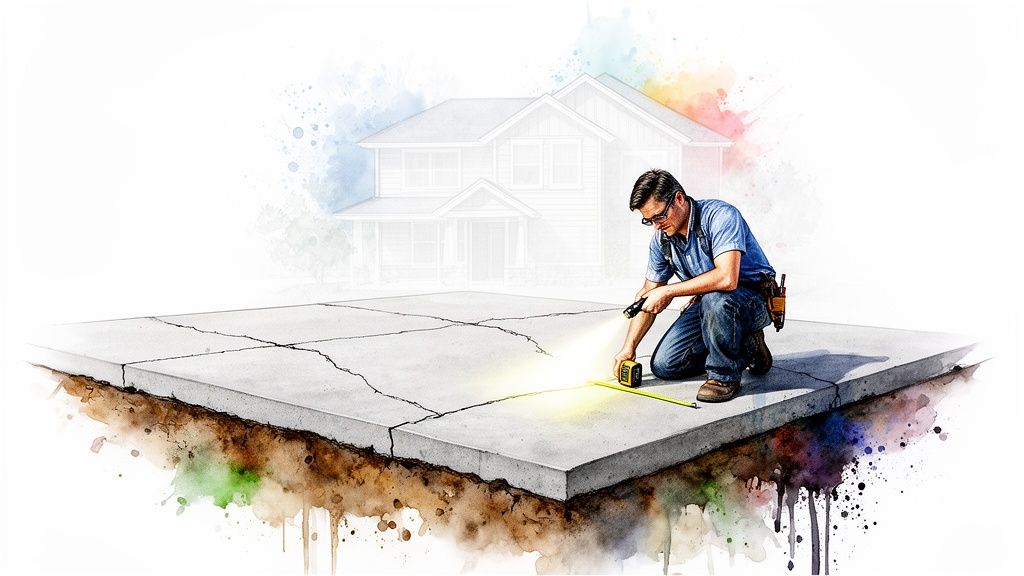
This question goes beyond a quick glance for cracks. You’re investigating the home’s ability to withstand environmental stressors, from the shifting soils of the Hollywood Hills to the damp, salt-air environment of coastal Santa Monica. The goal is to uncover any history of settling, water intrusion, seismic vulnerability, or past repairs that could signal future problems.
What to Look For and Ask About
During your viewing, keep your eyes peeled for telltale signs of trouble. Uneven floors, doors that stick or don’t close properly, and visible cracks in walls (especially over doorways or where walls meet ceilings) are all potential red flags.
Here are specific, actionable questions to direct to the seller’s agent:
- Has the foundation ever been repaired? If so, ask for all documentation, including the scope of work, who performed it, and any warranties.
- Is the property bolted to its foundation? This is a key component of seismic retrofitting in California.
- Are there any known drainage issues on the property? Poor water management is a primary cause of foundation damage.
- Have there been any recent geological or soil reports conducted? This is especially relevant for hillside properties.
Next Steps and Professional Insight
A visual check is just the start. If the home is older or you have any concerns, hiring a licensed structural engineer is a crucial step. Their expertise is distinct from a general home inspection, providing a deeper, more specialized analysis. A structural engineer’s report will give you a clear verdict on the foundation’s health and a precise estimate for any necessary repairs, giving you powerful leverage in negotiations.
2. How are the electrical systems, plumbing, and HVAC working?
These three systems are the circulatory and respiratory networks of a home. Answering this question is crucial because failures here are not just inconvenient—they can be some of the most disruptive and expensive repairs a homeowner can face. In Los Angeles, where the climate varies from the salty air of Venice to the dry heat of the San Fernando Valley, these systems are put to the test daily.

This question probes the home’s operational health. You are evaluating whether the infrastructure can support a modern lifestyle, from charging an electric vehicle to enduring a weeklong heatwave. Outdated wiring, corroded pipes, or an aging HVAC unit are significant liabilities hiding behind the walls, common in everything from Pasadena’s historic Craftsman homes to mid-century properties in Los Feliz.
What to Look For and Ask About
During your walkthrough, pay attention to the functional details. Flip light switches, run the water in sinks and showers to check pressure, and look at the physical units themselves. Note the brand, age, and any visible signs of wear, leaks, or rust, especially on outdoor HVAC units exposed to coastal air.
Here are specific, actionable questions to direct to the seller’s agent:
- When were the electrical panel, plumbing, and HVAC systems last upgraded or replaced? Ask for any available permits and receipts for the work.
- What type of wiring does the home have? Identifying outdated knob-and-tube or aluminum wiring is a major safety and insurance concern.
- What are the plumbing pipes made of? Corroded galvanized steel or aging copper pipes could signal an impending—and costly—replacement.
- Can I see the maintenance records for the HVAC system? Regular servicing is a strong indicator of a well-maintained system.
- What are the average monthly utility costs? High bills can indicate poor insulation or inefficient systems struggling to keep up.
Next Steps and Professional Insight
Your observations and the agent’s answers will inform your next move. No matter how new the systems look, a general home inspector will provide the first layer of professional assessment. If the inspector flags any significant concerns like an ungrounded electrical system or an HVAC unit nearing the end of its lifespan, it’s time to call in the specialists. Getting quotes from a licensed electrician, plumber, or HVAC technician will give you a precise understanding of potential repair or replacement costs. This detailed financial information becomes a powerful tool for negotiating the final sale price.
3. What are the property taxes, HOA fees, and ongoing maintenance costs?
The sticker price is just the beginning. Some of the most critical questions to ask when viewing a house involve the ongoing costs that don’t show up in the mortgage payment. Understanding the total financial obligation is essential to avoid being “house poor” and to accurately gauge an investment’s potential. In Los Angeles, this means digging into a layered cake of expenses, from property taxes to hyper-local HOA fees and area-specific insurance needs.
This question forces you to look beyond the exciting parts of home shopping and focus on the practical, long-term reality of ownership. In a market as diverse as LA, these costs can swing wildly. A chic DTLA loft might have manageable property taxes but a hefty $600/month HOA, while a sprawling Pasadena home could have minimal HOA dues but a much larger tax bill based on its recent sale price. Ignoring these details is a recipe for financial strain.
What to Look For and Ask About
During the viewing, think like an accountant. A pristine pool or a state-of-the-art community gym isn’t free; its upkeep is baked into your monthly or annual fees. You need to uncover every recurring cost to build a realistic budget.
Here are specific, actionable questions to direct to the seller’s agent:
- What is the current annual property tax bill? Ask for the most recent statement, but remember your tax will be reassessed based on your purchase price.
- What are the monthly HOA dues, and what do they cover? Get a breakdown. Do they include water, trash, insurance, landscaping, or amenity access?
- Are there any pending special assessments or planned increases in HOA dues? A surprise five-figure bill for a new roof can derail your finances.
- Can you provide a copy of the HOA’s financial statements and reserve study? A healthy reserve fund means the community is prepared for major expenses.
- What are the average monthly utility costs for the past year? This includes electricity, gas, and water.
Next Steps and Professional Insight
Gathering this information is your first move, but verifying it is the critical second step. Don’t just take the agent’s word for it. Request all HOA documents for review during your due diligence period. For a deeper understanding of how property taxes function in Southern California, you can get a complete breakdown of property taxes in Los Angeles. Finally, calculate your total estimated monthly housing cost: principal, interest, taxes, insurance (including earthquake/flood policies), and HOA dues. This complete financial picture is the only way to know if you can truly afford the home.
4. What is the roof condition, and when was it last replaced?
A roof is your home’s first line of defense against the elements, and in Los Angeles, that means everything from relentless sun to the occasional atmospheric river. This is one of the most critical questions to ask when viewing a house because a full roof replacement is a massive expense, often running from $8,000 to over $25,000. Understanding its age and condition is crucial for budgeting and protecting your investment.

This question is about more than just leaks. It’s about the material’s lifespan, its suitability for the local microclimate, and its current state of repair. The Spanish tile roofs common in Pasadena may last a century but require skilled maintenance, while the asphalt shingles on a Santa Monica bungalow might degrade faster under intense sun and salty air. The age, material, and upkeep history directly impact your future maintenance costs, property value, and even your ability to get homeowner’s insurance.
What to Look For and Ask About
During your tour, look for obvious warning signs from the ground, such as missing, cracked, or curling shingles. Inside, check ceilings and the attic space for any water stains, discoloration, or signs of moisture, which could indicate an active or past leak.
Here are specific, actionable questions for the seller’s agent:
- How old is the current roof, and do you have documentation? Ask for receipts or permits for the last replacement.
- What type of roofing material is it? This determines its expected lifespan (e.g., asphalt shingle, tile, slate, flat roof membrane).
- Have there been any repairs in the last 5-10 years? Request records of what was fixed and by whom.
- Is there an existing warranty on the roof, and is it transferable to a new owner?
- For homes with tile roofs, has there been any history of broken or missing tiles needing replacement?
Next Steps and Professional Insight
A ground-level view is never enough. This is where a qualified professional becomes essential. Your general home inspector will provide an initial assessment, but if they flag any concerns or if the roof is over 15 years old, bringing in a dedicated, licensed roofing contractor for a separate evaluation is a smart move. They can get onto the roof for a hands-on inspection and provide a detailed report on its remaining lifespan and a firm quote for any needed repairs or replacement. This expert opinion provides powerful leverage in negotiations, potentially saving you thousands.
5. What is the neighborhood’s character, amenities, and future development plans?
You’re not just buying a house; you’re investing in a location and a lifestyle. This question forces you to look beyond the property lines and evaluate the very fabric of the community. In a sprawling metropolis like Los Angeles, neighborhood character can change dramatically from one block to the next, directly impacting your daily life, your property’s long-term value, and your overall satisfaction.
This inquiry is about understanding the present and future of the area. From the pedestrian-friendly streets of Pasadena to the emerging transit hubs in the San Fernando Valley, knowing the local dynamics is crucial. You’re assessing everything from current safety statistics and your ability to walk to a coffee shop to major infrastructure projects that could reshape the community in the years to come.
What to Look For and Ask About
During your visit, expand your “viewing” to the entire neighborhood. Drive, and more importantly, walk around. Get a feel for the area’s energy at different times of the day and week. A quiet street on a Tuesday morning might have a completely different vibe on a Friday night.
Here are specific, actionable questions for the agent and your own research:
- What are the recent crime trends in this specific area? Look beyond generalities and research specific data for the immediate vicinity using official sources.
- What major development or public works projects are planned? Think new Metro lines, mixed-use developments, or zoning changes that could impact traffic, amenities, and property values.
- What’s the proximity to essential amenities? Map out your distance to grocery stores, parks, public transit, and restaurants.
- Is there an active neighborhood council or community association? Their public meeting minutes can be a goldmine of information on local issues and future plans.
Next Steps and Professional Insight
Your personal observation is the first step, but it must be backed by objective data. Start by reviewing public resources like the LAPD’s official crime maps to get a clear picture of reported incidents. For future development, the Los Angeles City Planning website is an indispensable tool for researching zoning cases and specific plan updates.
Don’t underestimate the power of on-the-ground intelligence. Talk to potential neighbors you see out and about; their firsthand accounts of the area’s pros and cons are invaluable. Visiting local businesses and observing the community interaction can also provide a genuine sense of the neighborhood’s character. This due diligence ensures your investment aligns not just with your financial goals but with the lifestyle you envision.
6. Are there water damage, pest issues, or mold present?
Of all the questions to ask when viewing a house, this one targets the trifecta of hidden issues that can turn a dream home into a nightmare. Water damage, pests, and mold are not just cosmetic problems; they can compromise a home’s structural integrity, pose serious health risks, and lead to staggeringly expensive remediation projects. In Los Angeles, where rainy seasons can test a home’s waterproofing and pests are a year-round reality, uncovering these issues early is critical.

This question requires you to become a detective. You’re searching for evidence of past or present leaks, infestations, and the resulting fungal growth that can thrive in damp, dark spaces. From the salt-air corrosion in a Santa Monica property to potential termite damage in a historic Hollywood Hills home, the goal is to spot the red flags before they become your financial burden.
What to Look For and Ask About
During the tour, use your senses. Look for water stains on ceilings or walls, warped flooring, and peeling paint, especially around windows, doors, and under sinks. A persistent musty odor is a major red flag for hidden mold or moisture. Check the perimeter of the foundation for poor drainage or areas where water might pool.
Here are specific, actionable questions to ask the seller’s agent:
- Have there been any past insurance claims for water damage? A “yes” demands full disclosure and documentation.
- Is there a history of termites or other wood-destroying pests? Ask for any treatment records and warranties.
- What is the age and condition of the plumbing and roof? These are primary sources of water intrusion.
- How often is pest control service performed? This can indicate whether pest management has been proactive or reactive.
Next Steps and Professional Insight
Your initial observations are just a starting point. A standard home inspection will note visible signs of these problems, but you should insist on specialized inspections as part of your offer contingencies. A licensed pest inspector will provide a detailed report, which is a state requirement in California for most transactions. Additionally, if there’s any suspicion of mold, a dedicated mold inspection with air quality testing is a wise investment. These expert reports will give you a clear picture of the extent of any damage and the costs to fix it, providing crucial leverage for negotiations or the confidence to walk away.
7. What are the property’s renovation, update, and upgrade needs?
Beyond the functional systems, one of the most crucial questions to ask when viewing a house involves its aesthetic and modernization potential. In a market as varied as Los Angeles, where a 1920s Spanish-style home sits a block away from a sleek new build, understanding the scope of necessary renovations is key to calculating the property’s true cost and future value. This isn’t just about spotting an ugly paint color; it’s about evaluating the investment required to meet modern standards and your personal lifestyle.
This question forces you to look at the house with two sets of eyes: as a homebuyer and as a project manager. A mid-century home in Pasadena might have incredible bones but require a full kitchen and bath overhaul to maximize its charm and ROI. A loft in Downtown LA might only need cosmetic tweaks to enhance its industrial character. Assessing these needs upfront prevents budget shock and helps you accurately compare a “move-in ready” home with a fixer-upper.
What to Look For and Ask About
Walk through the property with a critical eye, moving beyond staging and looking at the core finishes. Examine the condition of kitchen cabinets, countertops, bathroom fixtures, flooring, and lighting. These are the high-impact, high-cost areas that define a home’s modern appeal and livability.
Here are specific, actionable questions to ask the agent:
- When were the kitchen and bathrooms last updated? Ask for permits if major work like moving plumbing or walls was involved.
- Are there any known issues with the finishes? This could include things like failing grout in a shower, peeling laminate on cabinets, or scratched hardwood floors hidden under a rug.
- What materials were used for key surfaces like countertops and flooring? Knowing this helps you estimate repair or replacement costs.
- Did the current owners have any planned improvements they didn’t get to? This can reveal known deficiencies or untapped potential.
Next Steps and Professional Insight
Your initial walkthrough creates a “wish list” and a “needs list.” The next step is to quantify it. For significant projects, it’s wise to get a preliminary estimate from a contractor. Even a rough quote for a bathroom remodel or new flooring can drastically change the financial picture of the home.
For investors, this analysis is even more critical. Researching recently sold, updated comps in the neighborhood will show you which renovations yield the highest return. Factoring in a 10-15% contingency buffer for your renovation budget is a non-negotiable pro-move to protect against unexpected discoveries once walls are opened up. This due diligence ensures your offer price accurately reflects the work ahead.
8. What are the property’s potential rental income and investment returns?
For buyers wearing an investor’s hat, this is one of the most critical questions to ask when viewing a house. Whether you’re a first-time buyer looking to house hack, a seasoned investor expanding a portfolio, or a fix-and-flipper scouting the next project, a property’s financial performance is the ultimate metric. In a dynamic market like Los Angeles, understanding the numbers is the difference between a high-performing asset and a financial drain.
This question forces you to look past the curb appeal and analyze the property as a business. It involves researching comparable rents, understanding local regulations, and calculating realistic expenses to project cash flow, appreciation, and overall return on investment (ROI). From a duplex in Pasadena with stable, long-term tenants to a stylish loft in Downtown LA, each property has a unique financial profile.
What to Look For and Ask About
During your viewing, assess features that appeal to renters, such as updated kitchens, in-unit laundry, or private outdoor space. Consider the property’s layout for potential uses, like a single-family home in the Hollywood Hills that could be a lucrative short-term rental, pending local licensing rules.
Drill down with these specific financial questions for the seller’s agent:
- If it’s a multi-unit, can I see the current rent roll and tenant leases? This verifies actual income versus projected.
- What are the average utility costs and property taxes? These are key components of your operating expenses.
- Are there any local restrictions on rentals? Ask about rent control, short-term rental ordinances (like Airbnb rules), or HOA rental caps.
- What are the comparable market rents for similar units in this neighborhood? Don’t just take their word for it; do your own research on Zillow, Apartments.com, and by talking to local property managers.
Next Steps and Professional Insight
A cursory glance at rental comps isn’t enough. You need to run the numbers thoroughly. A crucial next step is to accurately calculate potential ROI, including metrics like cap rate and cash-on-cash return. Properly estimating your operating expenses (typically 30-40% of gross income for maintenance, vacancies, insurance, and management) is vital for a realistic projection. For multi-family properties, performing due diligence on existing leases is non-negotiable. Consulting with a local property management company can also provide invaluable, street-level data on rents, vacancy rates, and desirable amenities, giving you the confidence to make a sound investment decision.
8-Point House-Viewing Comparison
| Item | Complexity 🔄 | Resources ⚡ | Expected outcomes ⭐ | Ideal use cases 💡 | Key advantages 📊 |
|---|---|---|---|---|---|
| Structural integrity & foundation condition | High 🔄 — requires structural engineer, possible invasive assessment | Moderate–High ⚡ — engineer $500–$1,500; specialized testing | Critical safety validation; potential major remediation revealed ⭐ | Homes >30 years, hillside lots, earthquake‑prone areas 💡 | Prevents catastrophic costs; strengthens repair negotiation position 📊 |
| Electrical, plumbing & HVAC systems | Medium–High 🔄 — system testing by licensed contractors | Moderate ⚡ — inspections $200–$500 per system; upgrade costs possible | Identifies safety hazards and energy/utility projections ⭐ | Older homes, conversions, coastal properties with heavy HVAC use 💡 | Reveals fire/plumbing risks; informs efficiency and replacement timing 📊 |
| Property taxes, HOA fees & ongoing maintenance costs | Medium 🔄 — document & HOA financial review | Low–Moderate ⚡ — request statements; obtain insurance quotes | Accurate monthly cost and ROI picture; exposure to special assessments ⭐ | Condo buyers, investors, budget‑conscious purchasers 💡 | Reveals recurring costs and insurance needs; aids financial planning 📊 |
| Roof condition & replacement history | Medium 🔄 — visual + roofing inspection, attic check | Moderate ⚡ — inspection fees; replacement $8k–$25k+ depending on material | Predictable maintenance timeline; impacts insurability and value ⭐ | Older roofs, tile/slate homes, properties with coastal exposure 💡 | Prevents leaks; affects insurance rates and resale value 📊 |
| Neighborhood safety, walkability & development plans | Low–Medium 🔄 — data review plus multiple site visits | Low ⚡ — public records, crime maps, planning docs, on‑site visits | Affects appreciation trajectory and daily lifestyle suitability ⭐ | Long‑term owners, investors, transit‑oriented buyers 💡 | Identifies appreciation drivers and lifestyle fit; flags development risks 📊 |
| Water damage, pest issues & mold | High 🔄 — specialist mold/pest inspections, moisture diagnostics | Moderate–High ⚡ — inspections $300–$800; remediation can be expensive | Health and structural risk assessment; remediation scope defined ⭐ | Coastal, older, or multi‑unit properties; homes with visible stains/odors 💡 | Protects occupant health; prevents escalating structural damage and claims 📊 |
| Renovation, update & upgrade needs | Medium 🔄 — contractor estimates, permit and scope planning | Variable ⚡ — depends on scope; multiple contractor bids required | Renovation roadmap and ROI estimates; prioritization of projects ⭐ | Fix‑and‑flip investors, owners planning major updates 💡 | Prioritizes high‑value upgrades; enables realistic budget and timeline 📊 |
| Rental income potential & investment returns | High 🔄 — market & regulatory analysis, cap‑rate modeling | Moderate ⚡ — market reports, property manager input, tenant data | Projected cash flow, cap rate and multiple return scenarios ⭐ | Buy‑to‑rent investors, multi‑unit purchasers, portfolio builders 💡 | Quantifies investment potential; supports offer and financing strategy 📊 |
From Questions to Keys: Your Next Move in the LA Market
Walking out of a home viewing can feel like a whirlwind. The scent of fresh paint, the way the afternoon light hits the kitchen, the vision of your life unfolding within those walls—it’s all incredibly compelling. But as we’ve explored, the difference between a dream home and a financial nightmare often lies in the quality of your questions. You’ve now moved beyond the basics and are armed with a strategic toolkit designed for the unique and often demanding Los Angeles real estate landscape.
You’re no longer just a passive observer; you’re an active investigator. This comprehensive list of questions to ask when viewing a house is your secret weapon, transforming you from a hopeful buyer into a confident, well-informed decision-maker. Remember, the goal isn’t to find a “perfect” house devoid of any issues, because such a property rarely exists, especially in a city with as much character and history as LA. The true objective is to uncover the full story of a property, understand its quirks, quantify its potential costs, and negotiate from a position of strength and knowledge.
Synthesizing the Answers for a Clearer Picture
The power of these questions multiplies when you begin to connect the dots between the answers. A seemingly minor detail in one area can have significant implications in another.
- Structural Integrity and Renovation Potential: An older foundation might not just be a structural concern. It could dramatically increase the cost and complexity of that dream kitchen renovation you were planning, requiring specialized engineering and permits.
- Systems and Ongoing Costs: An aging HVAC system combined with high HOA fees that don’t cover system replacements can create a perfect storm for unexpected, five-figure expenses right after you move in.
- Neighborhood Vibe and Investment Returns: Discovering a new metro line or a major commercial development is planned nearby doesn’t just impact your future commute or walkability. It directly influences the property’s long-term appreciation and rental desirability.
For those with an eye on investment, especially in popular LA neighborhoods from Venice to Silver Lake, understanding the short-term rental market is crucial. Analyzing data is key to projecting realistic income. For granular insights on occupancy rates, average daily rates, and revenue potential in specific regions, resources like the detailed Los Angeles Airbnb Analytics can provide a data-driven foundation for your investment calculations, turning a gut feeling into a solid business case.
Your Actionable Path Forward
Knowledge without action is just trivia. Your next steps are what will ultimately lead you to the right front door.
- Prioritize Your Questions: You won’t have time to ask every single question at every single viewing. Before you go, identify your top 5-7 “deal-breaker” questions based on your personal priorities (e.g., budget for repairs, desire for a turnkey property, investment goals).
- Document Everything: Take notes, photos, and videos (with permission, of course). When you’re viewing multiple properties, the details will blur together. A well-documented viewing is an invaluable reference.
- Trust, But Verify: A seller’s agent is obligated to disclose known material facts, but their primary duty is to the seller. Use their answers as a starting point for your own due diligence, which includes a professional home inspection and reviewing all disclosure documents with a critical eye.
Mastering this investigative approach empowers you to see beyond the staging and the sales pitch. It allows you to assess risk, identify opportunity, and ultimately, make an offer with the confidence that you understand exactly what you are buying. You are not just purchasing a property; you are investing in your future, and in a market as competitive as Los Angeles, every piece of information is a competitive advantage.
Navigating the complexities of the LA market, from seismic retrofitting requirements to local zoning laws, requires more than just a checklist; it requires a dedicated partner. At ACME Real Estate, we specialize in helping our clients ask the right questions, understand the nuanced answers, and strategize their next move. Let’s turn your newfound knowledge into the keys to your new home.
 ACME Real Estate | Los Angeles Boutique Real Estate Brokerage