
Selling a luxury home in Los Angeles isn’t a transaction; it’s a performance. This is where art, commerce, and personal connections intersect, and success demands a mastery of pricing strategy, storytelling, and an almost obsessive focus on the details. This is the playbook for positioning your property as a one-of-a-kind asset and capturing the attention of the world’s most discerning buyers.
The Unspoken Rules of High-End LA Real Estate

Selling a standard home is about process. Selling a luxury property is an exercise in brand management. The buyer pool is incredibly small, the stakes are stratospheric, and the expectations are on another level entirely. This isn’t about just listing on the MLS and hoping for the best. It’s about crafting an exclusive experience from the very first impression to the final signature.
Success in this arena requires a complete mental shift. You aren’t just selling square footage, bedrooms, and a pool. You’re selling a story, a lifestyle, and a legacy. Every single detail—from the scent in the foyer to the weight of the paper used for marketing brochures—must scream sophistication and value.
This requires a different way of thinking. Before we get into the nuts and bolts, it’s crucial to understand how the standard rules of real estate just don’t apply here.
The Luxury Seller’s Mindset Shift
| Standard Tactic | Luxury Approach | Why It Matters |
|---|---|---|
| Focus on Price Per Square Foot | Focus on “Vibe Per Square Foot” & Story | Buyers are purchasing an identity, not just a structure. The emotional connection and lifestyle narrative are paramount. |
| Broad Marketing on Zillow/MLS | Targeted, Narrative-Driven Marketing | The goal isn’t to reach everyone; it’s to reach the right one. This requires precision targeting and compelling storytelling. |
| Open Houses for General Public | Private, Vetted Showings Only | Discretion is everything. High-net-worth buyers demand privacy and security, making public access a non-starter. |
| Standard Staging | White-Glove, Bespoke Staging | Staging must feel aspirational and authentic to the lifestyle being sold, often involving high-end art and custom furniture. |
| Price High and Negotiate Down | Price Strategically from Day One | An overpriced luxury listing becomes stale quickly. A sharp, well-researched price creates urgency and attracts serious players. |
Getting this right from the start prevents costly mistakes and ensures you’re playing the same game as your target buyer.
Understanding the Luxury Buyer’s Psyche
Ultra-high-net-worth individuals operate on a different plane. Their decisions are driven by a unique mix of emotional triggers and pragmatic demands that go far beyond what shows up on a comp report.
- Discretion is Paramount: Privacy isn’t a feature; it’s a fundamental requirement. They expect absolute confidentiality from everyone involved. Any leak is a deal-killer.
- Time is the Ultimate Luxury: Their schedules are insane. The entire process must be seamless, efficient, and respect their most valuable asset—their time.
- Legacy and Lifestyle Matter: They are buying a statement piece, an extension of their personal brand. The property must align with the identity they’ve built or the one they aspire to.
- Value Over Price: They are shrewd negotiators, no doubt. But the final decision often hinges on intangible value—the story, the exclusivity, the emotional pull—not just the bottom-line price.
Navigating Today’s Market Dynamics
The luxury market beats to its own drum, separate from broader real estate trends. Right now, in 2025, one of the sharpest strategies is to price aggressively but realistically. We’re in a cooling—but still very resilient—market where only 14.06% of listings sold above the asking price in January 2025. That’s a massive drop from the 37% peak we saw during the 2021-2023 frenzy.
Getting these unspoken rules right is the foundation for a flawless sale. Before we dive into the specifics of pricing, staging, and marketing, internalizing this perspective is the most critical first step. It’s the difference between a property that sells for a record price and one that just sits.
Mastering the Art of Strategic Luxury Pricing
Pricing a luxury home in Los Angeles isn’t science; it’s an art form. It’s a delicate dance between cold, hard data and gut instinct, honed over years of watching this market. Get it wrong, and a magnificent property can sit for months, collecting the kind of stigma that repels the very buyers you want to attract. Get it right, and you create an almost magnetic pull, drawing in the perfect buyer who sees the value and is ready to pay a premium for it.
This isn’t your standard real estate game. Forget price-per-square-foot. That’s for tract homes. In the luxury space, you’re not just selling rooms and a roof; you’re selling a narrative. You’re selling architectural significance and an exclusive lifestyle that can’t be replicated. The process starts with the numbers, but it always ends with a deep understanding of what makes the ultra-affluent buyer tick.
Beyond the Basic Comps
A standard Comparative Market Analysis (CMA) is a starting point, but for a high-end property, it’s just the appetizer. You need a bespoke analysis that treats the home like the one-of-a-kind asset it is. This means digging deeper than recent sales on the same street. It means looking for properties with a similar vibe or architectural DNA, even if they’re in a different zip code.
Think about it. A Richard Neutra-designed home in the Hollywood Hills has more in common with another Neutra masterpiece in Pasadena than it does with the brand-new spec build next door. Their value is intrinsically tied to their story and creator.
A strategic pricing analysis has to weigh the intangibles:
- Architectural Pedigree: Was the home designed by a name-brand architect like Neutra, Lautner, or Wallace Neff? That name alone can add a massive premium.
- Historical Significance: Does the property have a unique story? Was it owned by a Hollywood legend? Stories are currency in this market.
- Irreplaceable Views: That jaw-dropping, protected view of the city skyline or the Pacific Ocean is a priceless asset that defies any simple calculation.
- Bespoke Finishes and Amenities: We’re talking about custom-quarried Italian marble, a screening room tuned by a world-class acoustician, or a professional-grade recording studio. These aren’t line items on a spreadsheet; they are powerful emotional drivers.
The Psychology of Aspirational Pricing
Setting the price on a luxury home is also a psychological play. You’re not just slapping a number on it; you’re crafting a value statement that feels both aspirational and completely justified. This is where the debate between data-driven pricing and what I call ‘aspirational’ pricing really heats up.
Aspirational pricing means setting the list price slightly above what the comps might strictly suggest, positioning the home as a true trophy. This strategy can be incredibly effective when a property has truly unique features that trigger that emotional, “I have to have it” response. It telegraphs confidence and exclusivity.
But it’s a tightrope walk. Price it too high, and you look out of touch, alienating serious buyers who don’t see the value. The key is having an undeniable story and features that back up every single dollar of that premium.
A price isn’t just a number; it’s the opening line of your property’s story. It sets the tone for every negotiation, every showing, and every piece of marketing that follows. Make sure it’s telling the right story from day one.
Finding the Sweet Spot
So where do you land? The perfect price is the one that generates immediate, qualified buzz. It gets the right brokers and buyers scheduling private showings within the first couple of weeks. It should feel ambitious, but still within reach for your target buyer profile.
Here’s a look at how we get there:
- Establish the Data Baseline: First, we pull all the recent sales of comparable properties, looking at size, location, and condition. This is our floor, the absolute minimum.
- Layer on the Intangibles: Then, we start quantifying the unquantifiable. What’s that view worth? The architect’s name? The privacy? This is where years of experience and market intuition are everything.
- Assess the Competition: What else is on the market right now? How does your property stack up against them in style, condition, and story? You want to be the most compelling option in your price bracket, not just another choice.
- Set the Strategic Price: Finally, we blend all these elements to land on a price that creates urgency without seeming delusional.
At the end of the day, pricing a luxury home is about recognizing you’re selling a one-of-one piece of art, not a commodity. It takes courage, deep market insight, and the ability to articulate a value that goes way beyond a spreadsheet. By mixing analytical rigor with a storyteller’s touch, you position your property not just to sell, but to command its true worth.
Crafting a Cinematic First Impression
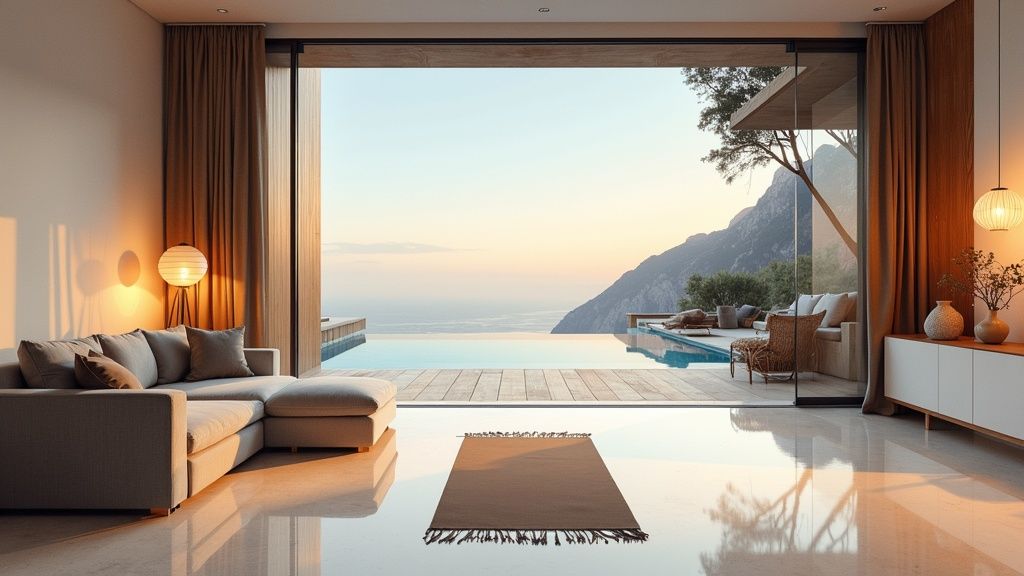
In the high-stakes world of Los Angeles real estate, buyers aren’t just looking for a house; they’re auditioning a lifestyle. Your property’s first impression has to be less like a walkthrough and more like a movie premiere. This isn’t about basic decluttering or a fresh coat of paint. We’re talking about “white-glove” staging—a bespoke, editorial approach that turns empty rooms into an aspirational story.
It’s all about creating an ambiance of effortless sophistication, where every detail feels curated but never forced. The goal is to make a potential buyer feel like they’ve just stepped into the pages of Architectural Digest. To get there, you have to nail the essential home staging tips for sellers that are proven to maximize a property’s appeal and final sale price.
Beyond Furniture: The Art of Lifestyle Staging
Standard staging just fills a space. Lifestyle staging tells a story. It’s the difference between placing a generic table on a patio and setting it for an intimate al fresco dinner party—complete with string lights, elegant dinnerware, and a bottle of wine chilling on ice. You’re not just showing them a patio; you’re showing them their future Saturday night.
Think in vignettes. Stage a corner of the primary suite with a yoga mat and water bottle overlooking the city skyline, hinting at serene mornings. By the infinity pool, arrange plush towels, designer sunglasses, and an open magazine to evoke lazy Sunday afternoons. It’s these subtle, powerful cues that transform a property from a structure into a coveted experience.
This approach involves a few key things:
- Bespoke Interior Design: We collaborate with top-tier stagers who have access to high-end, brand-name furniture, original art, and unique decor that actually matches the home’s architectural style and price point. No generic gray couches here.
- Sensory Engagement: This means curating a specific scent profile for the home, creating a custom playlist for showings, and using textures—like cashmere throws and silk pillows—that invite touch.
- Emotional Triggers: We pinpoint the unique lifestyle moments the property offers—the things you can’t see on a floor plan—and stage them to feel authentic and irresistible.
A luxury property should never feel staged. It should feel lived in—by the most interesting, successful, and stylish version of your potential buyer. The goal is to make them desperately want to become the person who lives there.
Producing the Blockbuster Visuals
Once the stage is set, it’s time to call in the film crew. Standard real estate photos won’t cut it. To sell a luxury home, your visuals need to be as compelling and high-production as the property itself. This is where you invest in a team that understands light, shadow, and how to tell a story with a camera.
The visual package is your property’s opening act, and it needs a standing ovation. This often means going beyond still photography to create a full-scale media campaign that captures the soul of the home. You need an artist behind the lens, not just a technician. If you’re curious about what goes into professional home staging budgets, our detailed guide breaks it down.
The Modern Luxury Visual Toolkit
- Twilight Photography: A non-negotiable for luxury listings. “Blue hour” shoots, taken just after sunset, create a magical, alluring glow that makes a home look dramatically more expensive and inviting.
- Cinematic Video Tour: This isn’t a shaky iPhone walkthrough. It’s a high-production lifestyle video, often featuring models, that feels more like a short film or a luxury car commercial. It tells the story of a day in the life at the property.
- Aerial Drone Footage: Drones are essential for showcasing the scale of the estate, the surrounding landscape, and the property’s relationship to its environment—whether that’s beachfront access or sweeping city views.
These days, wellness-focused amenities are a huge draw. I’ve seen sellers justify a premium price point just by highlighting features like smart tech, saunas, and air purification systems. It taps directly into what modern buyers want: a healthy, sustainable lifestyle. This cinematic approach ensures your property doesn’t just get seen—it gets remembered.
Reaching Affluent Buyers Across the Globe
Selling a luxury home in Los Angeles means you have to think globally. Period. Thinking locally is leaving millions on the table.
Your perfect buyer isn’t just cruising open houses in Beverly Hills. They might be in Dubai closing a deal, on a yacht off the coast of Monaco, or managing their portfolio from Singapore. These aren’t just buyers; they’re global citizens, and your marketing has to meet them where they live, work, and play. This isn’t about blasting your listing everywhere—it’s about surgical precision.
The only way to win is with a two-pronged attack: razor-sharp digital targeting combined with the old-school muscle of a private, global network. You have to create an undeniable magnetic pull around your property, making it clear this isn’t just a house, it’s a strategic asset.
The Digital Offensive
Forget about boosting a post on Facebook and calling it marketing. That’s amateur hour. Reaching high-net-worth individuals (HNWIs) demands a much smarter, more discreet approach. They’re online, but they’re guarded, and they can smell a sales pitch a mile away.
Here’s what a real digital strategy looks like:
- Elite Property Portals: Your listing needs to be on platforms like Mansion Global from The Wall Street Journal, Christie’s International Real Estate, and JamesEdition. These are the digital country clubs where serious, pre-qualified buyers congregate.
- Hyper-Focused Social Ads: LinkedIn and Instagram are incredibly powerful tools if you know how to use them. We can target users by job title (CEO, Neurosurgeon, Venture Capitalist), by their passions (fine art collecting, yachting, private aviation), or by financial indicators that signal high net worth.
- PR and Media Placement: An advertisement is just an ad. A feature story in Robb Report, Forbes Global Properties, or Architectural Digest is a stamp of approval. It elevates the property from a listing to a newsworthy event.
The goal is to create an omnipresent but subtle footprint. The right buyer should feel like they’ve stumbled upon an exclusive opportunity, not like they’ve been targeted by a marketing campaign.
Let’s be clear: a global reach isn’t just a nice-to-have anymore. With 40% of Americans considering a move abroad and 14% actively planning it, the pool of domestic buyers is changing. Meanwhile, foreign investors continue to see prime U.S. real estate as a safe harbor for their capital. Your marketing absolutely must speak to both.
The Power of the Private Network
Digital marketing gets you wide. A private network gets you deep.
For all the tech in the world, the biggest deals in luxury real estate are still cut through trusted relationships. This is where an agent’s “black book” becomes your most powerful weapon. It’s not just a list of contacts; it’s a living, breathing ecosystem of influence built over decades.
This network plugs your property directly into the right circles:
- Top International Buyer’s Agents: We have direct lines to the most effective agents in key wealth hubs like London, Hong Kong, and Geneva.
- Wealth Managers & Financial Advisors: These are the gatekeepers. They know when their clients are looking to diversify into real estate, long before anyone else does.
- Family Offices: These private firms manage the fortunes of the world’s wealthiest families, often making quiet, off-market acquisitions.
The dynamics of these deals are different. To get a feel for how the truly big sales happen, look at how Hamptons real estate really changes hands—it’s all about privacy, discretion, and inside tracks. And if you’re working with international buyers, you need to know the rules of the game. Our guide on whether foreigners can buy property in the USA is a must-read.
By fusing a sophisticated digital presence with a deeply entrenched global network, we make sure every single potential buyer sees your property—whether they’re scrolling Instagram in Bel Air or getting advice from their wealth manager in Zurich. This is how you don’t just sell a home; you break records.
Navigating High-Stakes Negotiations
Once an offer lands, the whole game changes. The public performance of marketing is over, and the private, high-stakes ballet of negotiation begins. This isn’t about winning an argument; it’s about finessing a multi-million-dollar deal with strategic calm, unwavering confidence, and total discretion. This is where fortunes are protected.
The very first move? Knowing exactly who you’re dealing with. In the luxury market, an offer is just a piece of paper without ironclad proof of financial capacity. We’re not talking about a pre-approval letter from a bank. We’re talking about a rigorous, white-glove qualification process.
Vetting Buyers Before the First Counter
Before you even think about countering an offer, your agent needs to do a deep dive into the buyer’s actual ability to close. This is non-negotiable. It protects your time, your privacy, and your negotiating position. An unqualified buyer can tie up your property for weeks, only for the deal to collapse and tarnish its reputation.
The vetting checklist has to be thorough:
- Verified Proof of Funds: This means recent, direct statements from a financial institution—not some vague letter from a wealth manager.
- Source of Funds: Is the money liquid? Is it tied up in securities? Is it coming from an international account? The answers are critical for anticipating potential closing delays.
- Buyer’s Representation: Is their agent a known and respected pro in the luxury space? An agent’s reputation often signals how serious their client is.
- Signed Non-Disclosure Agreements (NDAs): Before any sensitive financial information gets passed around, an NDA often needs to be in place. It sets a professional tone right from the start.
Vetting isn’t about being difficult; it’s about being smart. It filters out the tourists and tire-kickers, ensuring you only engage with individuals who have the genuine intent and the verified capacity to acquire your property. This is a foundational element of any successful sale.
The Art of the Counteroffer
With a qualified buyer confirmed, the real chess match begins. The goal here isn’t to squeeze every last dollar out in a bruising fight. It’s about crafting a scenario where the buyer feels they’ve acquired a prized asset and you feel you’ve received its true value.
You have to think beyond the final price. High-net-worth individuals often care just as much, if not more, about the terms and conditions. These are your points of leverage.
For instance, a buyer might ask for a lower price but be willing to offer a non-refundable deposit, a quick closing timeline, or waive certain contingencies. These concessions can be worth far more than a slightly higher price because they bring immense security and certainty to the deal.
Managing Complex Logistics and Closing
Once you agree on terms, the final phase is all about execution. A luxury closing is a complicated affair with a whole team of professionals who need to be perfectly in sync. Your agent acts as the conductor, making sure every player—lawyers, accountants, estate managers—hits their notes on time.
This stage means navigating a few key elements:
- Intricate Contingencies: These can range from inspections of a wine cellar’s climate control system to securing approvals for future renovations.
- Attorney Review: Both sides will have legal counsel meticulously going over every single clause in the contract.
- Title and Escrow Coordination: Ensuring a clean title and managing the secure transfer of a huge sum of money requires specialists who handle high-value transactions every day.
The negotiation process is a delicate art, and understanding the playbook is key. To dig deeper, you can explore some proven real estate negotiation strategies that can give you a critical edge. By combining rigorous buyer qualification with strategic negotiation and flawless management of the closing, you can confidently guide your property from a promising offer to a seamless, successful close.
The Los Angeles Luxury Seller’s Timeline & Checklist
Selling a high-end property isn’t something you rush. It’s a marathon, not a sprint. To avoid any detail falling through the cracks, you need a solid game plan. This timeline breaks the entire process into manageable phases, giving you the confidence that everything is being handled with precision from day one to the closing table.
This isn’t just about ticking boxes; it’s your roadmap to a successful, organized sale. It covers the big picture: rigorously vetting potential buyers, navigating tricky negotiations, and executing a flawless closing.
Let’s break down exactly what needs to happen and when.
Phase 1: Pre-Launch Prep (4-8 Weeks Before Hitting the Market)
This is where the real work happens, long before the first buyer ever steps foot inside. Getting this stage right is what sets you up for a powerful market debut and prevents headaches down the road. It’s all about assembly and preparation.
- Build Your A-Team: Lock in your luxury real estate agent, a sharp real estate attorney, and a high-end stager. This is your core team, and they’ll guide every move you make.
- Deep Dive on the Property: It’s time to gather every document you can find—blueprints, the property survey, permits for any renovations, and a detailed list of unique features and recent upgrades. Nothing gets overlooked.
- White-Glove Perfection: Walk the property with your agent and schedule any necessary touch-ups. This isn’t about huge renovations; it’s about perfecting the details—a fresh coat of paint, pristine landscaping, and fixing anything that might distract a buyer.
- Finalize the Staging Vision: Your stager isn’t just bringing in furniture. You’ll work together to finalize the design concept, get the right pieces ordered, and schedule the full installation.
Phase 2: Crafting the Story and Going Live (2-4 Weeks Before and During Listing)
The house is perfect. Now, it’s time to build the narrative and launch it to the world. This phase is all about creating an allure that captivates the right audience, not just any audience.
This isn’t just about listing a property; it’s about launching a brand. Every photo, video, and word must align to tell a singular, compelling story of a life that can only be lived in this home.
- Create the Visuals: All photography, cinematic video, and drone shots need to be completed. Crucially, this happens after the staging is 100% finished. Don’t cut corners here.
- Develop the Marketing Assets: You’ll review and approve everything from the property brochure and dedicated website to the digital ad campaigns.
- Launch Sequence: Your agent will orchestrate a coordinated launch across exclusive property portals, the MLS, and their private international network of contacts.
- Press and Media: At the same time, your agent should be reaching out to targeted media outlets for potential features. A story in the right publication can be invaluable.
Phase 3: Showings, Offers, and Negotiations (Ongoing)
Once you’re live, the game changes. This is the active phase where you showcase the property and field interest from qualified buyers. It demands diligence and strategy.
- Manage Private Showings: Forget open houses. Every showing should be private and for a pre-vetted buyer. Your agent will manage the schedule to minimize disruption to your life.
- Weekly Strategy Calls: You and your agent should connect weekly to review showing feedback, what’s happening in the market, and how the marketing campaigns are performing.
- Vetting Every Offer: Any offer that comes in needs to be rigorously qualified. That means verifying proof of funds before you even think about entering negotiations.
Following this checklist turns a potentially overwhelming process into a series of strategic, manageable steps. It’s how you ensure a smooth transaction and, ultimately, a successful sale.
Your Questions Answered: The Truth About Selling Luxury in LA
Selling a high-end home in Los Angeles isn’t like selling anywhere else. The buyers are different, the stakes are higher, and the process is far more complex. We get asked the same handful of questions by nearly every luxury seller, so let’s cut through the noise and get straight to the facts.
How Long Will This Actually Take?
Let’s be direct: this isn’t a 30-day process. Selling a luxury property in Los Angeles is a game of patience and precision. While a typical home might move quickly, you should expect your home to be listed for anywhere from three to twelve months.
This isn’t a bad sign. It’s the reality of a much smaller, more discerning pool of qualified buyers. The timeline always comes down to three things: pricing it correctly from day one, telling a compelling story about the property, and a marketing plan that reaches buyers in Dubai as easily as it does in Beverly Hills. Trying to rush it is the fastest way to leave money on the table. The goal isn’t just to sell; it’s to find the one right buyer who sees the full value.
Do I Really Need to Pay for Professional Staging?
Yes. It’s not optional, it’s essential. For luxury properties, staging isn’t about decluttering or putting a few nice plants around. It’s about selling a fantasy—a lifestyle that a high-net-worth individual is ready to step into.
Great staging is the bridge between seeing a house and feeling at home. It allows a buyer to connect emotionally with the space, to see their art on the walls and imagine hosting friends by the pool. It’s what justifies the price tag and almost always results in better offers, faster.
What’s the Biggest Mistake I Could Make?
Overpricing. Hands down. The single most damaging error is letting emotional attachment dictate the asking price instead of relying on hard data and strategic market positioning. When a luxury home hits the market priced too high, it just sits there.
And once it sits, it gets a reputation. Savvy agents and their clients see the “days on market” number ticking up and immediately assume something’s wrong. This stigma is incredibly hard to shake, even after you drop the price. Your negotiating power is permanently weakened. A sharp, data-driven price from the very beginning is your single greatest asset.
How Much Does Digital Marketing Matter?
It’s everything. Today’s affluent buyers, whether they’re 35 or 65, are living online. They’re researching properties on their phones from private jets, watching property tours on Instagram, and scrolling through exclusive international listings on their iPads.
A world-class digital campaign with cinematic video, surgically targeted social media ads, and placement on global property portals is non-negotiable. It’s how you build buzz and prestige. It’s how you find that buyer in Hong Kong or London who is perfect for your home. Without a powerful online presence, you’re invisible to a massive slice of your target market.
Navigating the LA luxury market takes more than a “For Sale” sign—it demands a strategic partner who understands the art of the deal. At ACME Real Estate, we blend deep market intelligence with a true white-glove service to make sure your property doesn’t just sell, but sets a new standard.
Ready to find out what your home is truly worth? Contact us today for a confidential consultation.