
Making the leap from an apartment to a house is a monster upgrade. It’s not just a change of address; it’s a whole new level of adulting. The first mission is to get your head and your finances wired for the switch from renter to homeowner. Let’s make it as painless—and maybe even a little fun—as possible.
Setting the Stage for Your Big Move
Trading a lease for a deed is a huge win, no doubt. But the responsibility spike is real. You can’t just fire off a text to the landlord when the sink gets weird. Surprise! You are the landlord now.
This new reality means you need a rock-solid plan before you even think about buying a single box. You’re swapping a predictable monthly rent check for a mortgage, property taxes, insurance, and the random “fun” of surprise repairs. It’s a completely different financial ballgame, and preparation is your MVP.
Build a Homeowner’s Budget, Not a Renter’s
First up: get brutally honest with your money. A homeowner’s budget is so much more than the mortgage payment. You have to factor in all the new costs that were either baked into your rent or just didn’t exist in your apartment life.
- Property Taxes: This is a big one. It’s a hefty annual expense, usually paid monthly as part of your mortgage payment through an escrow account.
- Homeowners Insurance: It’s almost always beefier than renter’s insurance because you’re covering the entire structure, not just your vinyl collection. It’s also smart to dig into the difference between a home warranty vs. home insurance to see what kind of coverage cocktail works for you.
- Utilities: Brace for impact. It takes a lot more juice to heat and cool a whole house. Plus, you’ll be paying for water, sewer, and trash directly now.
- Maintenance Fund: This is non-negotiable. Financial pros suggest stashing 1-3% of your home’s purchase price every year for repairs. On a $400,000 house, that’s between $4,000 to $12,000 a year you need to have on deck.
The biggest financial gut-punch for new homeowners is often the unglamorous stuff. No one daydreams about replacing a water heater, but having a dedicated fund for it turns a full-blown crisis into a manageable headache.
Create a Reverse-Engineered Timeline
Once you have a target move-in date, work backward to build your timeline. This is the secret weapon against that last-minute panic that breeds stress and costly mistakes. This visual gives you a solid breakdown of the major stages.
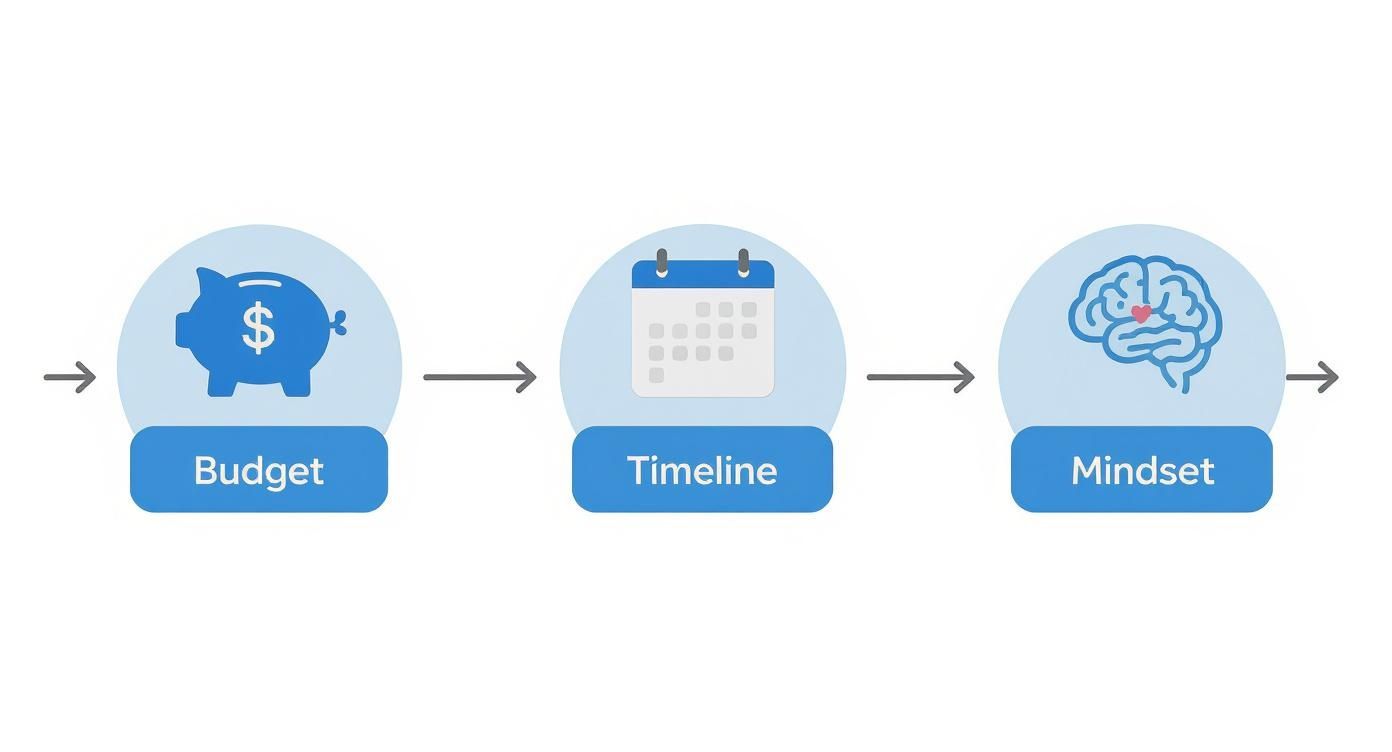
A killer plan built on budgeting, logistics, and mental prep is the core of a successful move. To really crush it, follow a timeline for planning your move that breaks everything down week-by-week. This proactive approach makes the whole process feel way less like a monster and more like a mission.
If you’re moving, you’re in good company. The national mover rate jumped to 8.7% in 2022, a noticeable rebound in household mobility. A huge slice of those 28.2 million movers are people just like you, looking to upgrade their living situation. You can discover more insights about moving trends from Bank of America’s latest report.
Curating Your Belongings for a New Home
It’s one of the great ironies of moving up: your first step in going from an apartment to a house is often getting rid of stuff. You’re gaining square footage, sure, but the furniture you crammed into a cozy apartment layout rarely vibes with a larger, more open floor plan.
This is your moment to be ruthless. Ditch the temporary fixes and the pieces that “just fit” and get intentional about what earns a spot in your new life. It’s not just decluttering; it’s a strategic audit of your belongings. Moving less stuff saves a shocking amount on boxes and movers, and it makes unpacking a thousand times less painful when you aren’t just shuffling clutter from one home to another.
The Room-by-Room Purge
The only way to eat an elephant is one bite at a time. The same goes for purging your apartment. Pick one room, crank up a playlist, and create four zones: Keep, Sell, Donate, and Toss. Now’s the time for brutal honesty. If you haven’t used it in a year, or if it was a classic “it’ll do for now” apartment solution, it’s probably time to let it go.
- Keep: These are the non-negotiables. The things you love, use constantly, or that hold real sentimental value.
- Sell: Think quality furniture that doesn’t fit your new vision, electronics you’ve since upgraded, or that designer jacket you never wear.
- Donate: Perfect for gently used items that can have a second life somewhere else—books, kitchen gear, or home decor.
- Toss: This is for the broken, the expired, and the completely worn out. Just be sure to recycle what you can.
What about the in-between stuff? The things you aren’t ready to part with but have no immediate place for in the new house. A temporary storage unit can be a lifesaver here. If you go this route, take a minute to learn about choosing the best storage facility so you know your things are in good hands.
Turn Clutter into Moving Cash
Don’t just write off your “sell” pile. It’s a goldmine. Platforms like Facebook Marketplace, OfferUp, or Poshmark can quickly turn those unwanted items into a healthy contribution to your moving fund.
The key to a quick sale is presentation. Take clear, well-lit photos from every angle. Write honest, detailed descriptions—include the dimensions and point out any minor flaws. For items in great shape, pricing them around 50-70% of the original retail price is usually the sweet spot.
Measure Twice, Move Once
This is the golden rule of moving from a smaller space to a larger one. That massive sectional that fit perfectly along your one long apartment wall? It might completely choke the flow of your new living room.
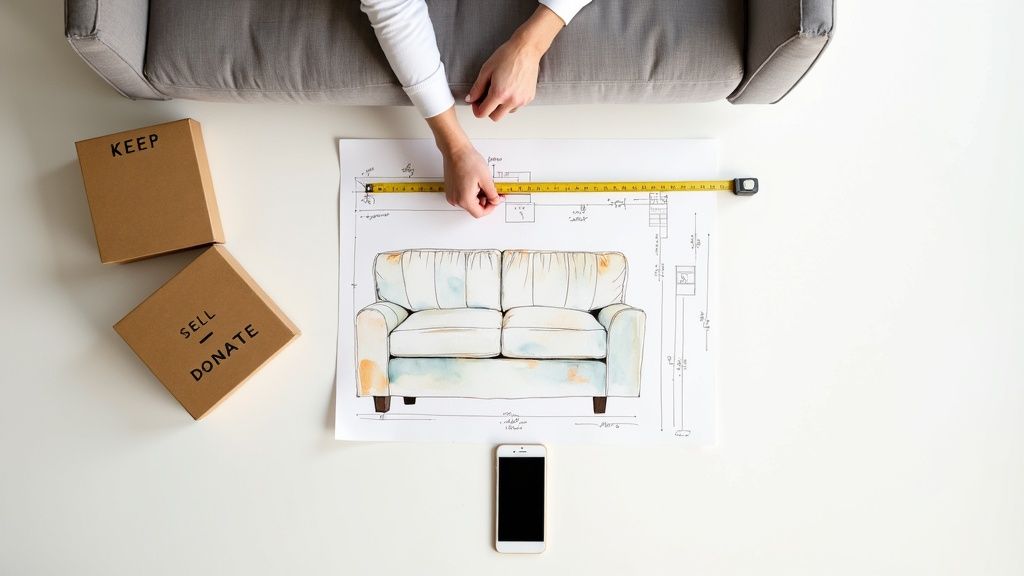
Before you pay a single dollar to move a large piece of furniture, measure it. Then, measure the doorways, hallways, and the exact spot where you think it will go in the new house. A roll of painter’s tape is your best friend here—use it to map out the furniture’s footprint on the new floors.
This simple five-minute check can save you from the classic moving-day nightmare of a sofa stuck sideways in a doorway. It guarantees that every big item you keep not only fits through the door but actually complements the scale and layout of your new, larger home.
Navigating the Logistics of Moving Day
The planning is done. Now for the hard part—getting everything you own from point A to point B. This is where your timeline and budget meet the pavement, literally. The big question everyone asks when moving from an apartment to a house is whether to hire pros or bribe their friends with pizza for a DIY move.
This decision isn’t just about money. It’s a gut check on your time, energy, and sanity. A professional crew can clear out a two-bedroom apartment in just a few hours, a task that might take you and a few buddies an entire weekend of back-breaking work.
Movers vs. DIY: The Great Debate
Let’s get real about what each choice actually means. Hiring movers feels like a luxury, but when you factor in the truck rental, gas, dollies, and the sheer value of your own time, the costs can get surprisingly close.
The national average cost to move hovers around $3,020, so every dollar counts. Economic factors play a huge role, too, with major migrations still pushing people toward Southern and Western states. You can discover more insights on moving costs and trends at This Old House to see how your move stacks up.
To make the decision easier, I’ve broken down the core differences between hiring movers and going it alone.
Moving Options Cost and Effort Comparison
This table lays out the trade-offs in plain terms, comparing the upfront costs, time drain, and physical toll of each path.
| Factor | Professional Movers | DIY Move (Truck Rental) |
|---|---|---|
| Average Cost | Higher upfront price, but often all-inclusive. | Lower initial cost, but add-ons like gas, insurance, and equipment pile up. |
| Time Commitment | Minimal. Your main job is to direct traffic and point. | Significant. Plan for a full day or weekend for packing, loading, and driving. |
| Physical Effort | Nearly zero. They do all the heavy lifting for you. | All of it. You are the muscle. Hope you’ve been stretching. |
| Risk of Damage | Low. Reputable companies are insured and experienced. | Higher. You’re on the hook for any dings to furniture or walls. |
Ultimately, it comes down to what you value more: your money or your time and back health. There’s no wrong answer, just the one that’s right for your situation.
Vetting Your Moving Crew
If you decide to hire professionals, do your homework. The moving industry has its share of shady operators. A lowball quote might seem tempting, but it can quickly balloon with surprise fees or, worse, lead to your belongings being held hostage.
A reputable moving company will always offer an in-person or detailed video estimate. Vague quotes over the phone based on the number of rooms are a major red flag.
When you’re interviewing companies, ask these non-negotiable questions:
- Are you licensed and insured? Ask for their DOT number and look it up.
- What is your policy for damaged items? Get the details on their liability coverage in writing.
- Do you offer binding or non-binding estimates? A binding estimate means the price won’t change, which is exactly what you want.
The Art of a Strategic Pack
How you pack is just as important as who moves your stuff. A smart packing strategy can make unpacking a breeze and save your belongings from the chaos of the move. Don’t just label boxes with the room name—that’s rookie stuff.
Get specific. A box labeled “Kitchen” is basically useless. A box labeled “Kitchen – Pots & Pans” or “Kitchen – Everyday Dishes” is a total game-changer. This simple shift in detail helps you prioritize what to unpack first so you can actually live in your new home.
The most critical tool in your arsenal is the “Open First” box. This isn’t just for essentials; it’s your survival kit for the first 24 hours. Pack it with toilet paper, medications, phone chargers, a toolkit, paper towels, and a coffee maker. Trust us on the coffee maker. You’ll thank us later.
Surviving the First 48 Hours in Your New Space

The keys are in your hand, the truck is gone, and you’re standing in a sea of brown boxes. Welcome home! The first 48 hours in a new house are less about decorating and more about strategic survival. How you handle these initial hours sets the tone for the entire settling-in process.
Your first mission, before you even think about unpacking, is to locate your new home’s vital organs. Find the main water shut-off valve and the circuit breaker panel. Immediately. You don’t want to be hunting for them in the dark during an emergency. Snap a photo of the labeled circuit breaker panel—it’s a simple move that will save you a ton of future headaches.
The Essentials Box Is Your Lifeline
That box you meticulously labeled “Open First” is now your MVP. Seriously, it’s the one thing standing between a chaotic first night and a semblance of order. Forget the kitchen gadgets for now; this box is all about immediate comfort and function.
This survival kit should have everything you need to get through a day without unpacking anything else:
- Basic Toiletries: Toothbrushes, toothpaste, soap, and a roll of toilet paper are absolutely non-negotiable.
- Medications: Any daily prescriptions or just some basic pain relievers.
- Chargers: For your phones and any other devices you can’t live without.
- A Simple Toolkit: A multi-bit screwdriver, a good box cutter, and maybe some pliers will be invaluable.
- Snacks and Water: Moving is a workout. Stay hydrated and energized.
Unpacking the essentials box first transforms an empty, echoing house into a functional base camp. It’s the small win you need to fuel the marathon of unpacking ahead.
Creating Functional Zones
Your goal for day one isn’t perfection; it’s to make the space livable. Start by assembling the beds. I can’t stress this enough. A good night’s sleep is crucial, and having a made bed to collapse into at the end of a long day is a massive psychological boost. This should be your top priority right after that initial safety walkthrough.
Next, establish a temporary kitchen zone. Unpack the coffee maker, a few mugs, some paper plates, and cutlery. This small step lets you refuel without digging through a dozen boxes or resorting to another night of expensive takeout. Having a dedicated spot for the basics helps manage the chaos.
For a more detailed breakdown, our guide on essential new home checklist items can provide a more structured approach. Just remember to focus on function over form to build some early momentum.
Turning Your New House into a Home
So you survived the move. The truck is gone, the boxes are piled high, and you’re standing in the middle of your very own house. This is where the real work begins—and I’m not talking about the logistics. I’m talking about the slow, rewarding process of making a structure feel like it’s actually yours.
Resist the urge to unpack everything at once. This isn’t a race, and rushing will just lead to burnout. You’ll end up with things simply placed where they fit instead of thoughtfully arranged.
My advice? Start with one room. The one you’ll use to escape the chaos, like your bedroom or the living room. Finish it completely. This gives you a single, box-free sanctuary to retreat to when the rest of the house feels overwhelming.
Your New Job Title: Head of Maintenance
One of the biggest shocks when graduating from tenant to homeowner is realizing there’s no landlord to call. You are now the first and last line of defense. Embracing this new role starts with getting intimately familiar with your home’s core systems.
Spend your first weekend doing a “home systems tour.” Don’t just find the circuit breaker and main water shut-off—really understand them. Figure out how your HVAC system works and, most importantly, how to change the filter (a task you should plan on doing every 1-3 months). Pop your head in to look at the water heater and make a note of its age.
Even basic lawn care is a new frontier. You don’t need to become a master gardener overnight, but figuring out the lawnmower is a good first step.
Think of home maintenance as a slow-drip education, not a final exam. You’ll learn as you go. The goal is to build confidence by tackling small, preventative tasks before they become big, expensive problems.
Weaving Yourself into the Neighborhood
A house is just four walls, but a home is part of a community. Making an effort to connect with your new surroundings is just as important as arranging furniture. Start simple: go for a walk with the sole purpose of saying hello to anyone you see. A friendly wave goes a surprisingly long way.
Here are a few low-pressure ways to get acquainted:
- Be a Regular: Find a local coffee shop or park and make a point to visit consistently. Familiar faces will quickly become friendly ones.
- Plug In Online: Check Facebook or Nextdoor for neighborhood groups. It’s the fastest way to get local recommendations, hear about events, and learn what’s happening on your street.
- Support Local: When you need a screwdriver, choose the local hardware store over a big-box chain. Try that family-owned restaurant on the corner. These small acts are what build real community ties.
This transition from renting to owning reflects a larger trend. Since the pandemic, we’ve seen a massive relocation from dense cities to more spacious suburban homes. Analysis of renter searches shows that while the long-distance moving frenzy has cooled, the hunt for affordability and space continues to drive people toward single-family houses. You can read more about recent renter migration patterns from Apartment List’s report.
As you settle in, you’ll inevitably start thinking about changes you want to make. When that time comes, our guide on how to estimate renovation costs will help you start planning.
A Few Lingering Questions

Making the jump from renting to owning is a huge life change, and it’s natural for new questions to pop up. We’ve been there. Here are some straight answers to the things that tend to keep new homeowners up at night.
What Are the Biggest Hidden Costs of Homeownership?
It’s not just the mortgage. New homeowners almost always get blindsided by a few expenses that were never on their radar as renters. Property taxes and homeowners insurance are the big ones, and they’re usually rolled into your monthly mortgage payment through an escrow account.
Utilities will almost certainly be higher in a bigger space, so budget for that. Also, plan for some immediate costs like getting the locks changed and buying window coverings for privacy.
The biggest financial mindset shift? You need an emergency fund for repairs. When the water heater dies or a pipe bursts, there’s no landlord to call. The buck stops with you, and that responsibility is 100% yours.
How Much More Furniture Will I Really Need?
It’s so tempting to want to fill every empty room the second you get the keys, but trust me, resist that urge. That’s a fast track to debt and a house full of stuff you don’t actually love. Instead, think strategically about the new kinds of spaces you have.
You’re going to need things you never even thought about in an apartment, like:
- Yard equipment (a lawnmower, a trimmer, the basics).
- A solid toolkit for all the minor repairs and furniture assembly in your future.
- Larger furniture pieces that are actually scaled to your new, bigger rooms.
The real key here is to take your time. A home that’s filled thoughtfully over months and years feels authentic. One that’s filled in a weekend just feels cluttered.
What Is the Hardest Lifestyle Adjustment to Make?
Honestly, it’s the sudden weight of responsibility for all the maintenance and upkeep. This requires a totally new way of planning your time and your money. Every little fix and every big project is now on your shoulders.
Another thing that catches people by surprise is the shift in community. In an apartment building, you bump into neighbors in the elevator or the mailroom. In a house, you often have to make a real effort to meet the people on your street. It’s a different rhythm, for sure, but building those connections is one of the most rewarding parts of settling in.
Navigating the move from a rental to your first house is a massive milestone, and having the right guide in your corner changes everything. At ACME Real Estate, our team lives and breathes Los Angeles real estate. We’ve got the local knowledge to walk you through every single step. See how a team that truly knows LA can make a difference at https://www.acme-re.com.