
Securing a hard money loan boils down to a simple formula: find a lender who gets it, bring them a deal that practically screams profit, and show them you have a killer exit plan. This isn’t about your FICO score or last year’s tax returns. It’s all about the asset’s future value and your strategy to unlock it.
This is the secret weapon for savvy investors who need to move at the speed of the market, closing deals in days, not the months it takes for a bank to shuffle paperwork.
Your Guide to Fast Real Estate Financing

Welcome to the fast lane. Forget the slow, soul-crushing bureaucracy of traditional banking. Hard money loans are your ticket to competing with all-cash buyers and snatching up opportunities everyone else is too slow to grab. These are short-term, asset-backed loans from private investors who care more about the deal itself than your personal financial history.
This isn’t your parents’ 30-year mortgage. The entire focus shifts away from you as the borrower and onto the property as the star of the show.
The premise is simple: If the deal is good and the profit margin is there, lenders are interested. They’re betting on the property’s potential—specifically, its After Repair Value (ARV).
Hard Money Loans vs Traditional Mortgages
Before we dive deeper, it’s crucial to understand just how different these two financing worlds are. One is built for speed and opportunity, the other for stability and long-term ownership. Picking the right tool for the job depends entirely on your project’s goals.
Here’s a quick breakdown of what sets them apart.
| Feature | Hard Money Loan | Traditional Mortgage |
|---|---|---|
| Funding Source | Private investors or companies | Banks, credit unions, mortgage lenders |
| Approval Criteria | Based on the property’s value (ARV) | Based on borrower’s credit, income, DTI |
| Closing Speed | 1-2 weeks (sometimes faster) | 30-60 days or more |
| Loan Term | Short-term (6-24 months) | Long-term (15-30 years) |
| Interest Rates | Higher (8%-12% or more) | Lower (based on market rates) |
| Property Condition | Ideal for distressed properties | Typically requires move-in ready condition |
The table makes it clear: if you’re flipping a house or need to close a deal yesterday, a hard money loan is your power tool. But if you’re buying a primary residence to live in for the next 30 years, a traditional mortgage is the only logical path.
Why Investors Turn to Hard Money
Investors use this kind of money for specific, time-crunched situations where a conventional loan would be a deal-killer. We’re talking about properties that banks wouldn’t touch with a ten-foot pole until they’re fixed up and stabilized. Having a solid house flipping business plan is how you show a lender you’ve done your homework and know exactly what you’re doing.
Here’s where hard money really shines:
- Fix-and-Flips: This is the classic scenario. You need to buy a distressed property, renovate it, and get it back on the market fast.
- Bridge Funding: Perfect for covering a financial gap, like when you need to buy your next property before the old one has sold.
- Construction Loans: Funding new construction without the red tape of a traditional bank.
- Distressed Properties: You found a gem at an auction or foreclosure sale, but you have to close in 10 days. A hard money loan makes that possible.
Yes, the interest rates are higher—you’ll typically see them in the 8% to 12% range—but what you’re really buying is speed. Approval can happen in a day or two, with funding in about a week. That’s a world away from the weeks or months of waiting on a conventional loan.
This agility is especially critical when you’re looking at niche properties. Think small commercial buildings or mixed-use projects that don’t fit neatly into a bank’s underwriting box. For anyone digging into financing options, understanding the broader world of commercial loans for investment property can provide valuable context, too.
Finding and Partnering with the Right Lender
Think of a hard money lender as a temporary business partner, not just a bank. They’re betting on you and your project’s success. The right one can pour jet fuel on your investing career. The wrong one? They can turn a slam-dunk deal into a total nightmare. This isn’t about a quick Google search; it’s about finding a real partner who gets what you’re trying to do.
Forget blindly trusting online directories or slick websites. The most reliable recommendations come from people who are actually in the trenches doing deals.
Go Where the Deals Are Done
Your first move is to tap into your local real estate scene. This is where you’ll find the lenders who are active, reputable, and understand the quirks of your specific market. Real investors don’t find their money partners through banner ads; they find them through relationships.
- Real Estate Investor Associations (REIAs): These are absolute goldmines. Go to local meetups, grab a drink, and start talking to people. Ask experienced flippers and landlords who they call when they need to close fast.
- Online Investor Forums: Jump into Facebook groups and forums focused on your city or state. Pay attention to who keeps getting recommended for fix-and-flips or bridge loans. Reputations, good or bad, travel fast in those circles.
- Your Professional Network: Talk to your real estate agent, your go-to person at the title company, or your real estate attorney. These folks see deals close every single day. They know which lenders perform and, more importantly, which ones flake out at the last minute.
Vetting Your Potential Funding Partner
Once you have a shortlist of names, it’s time to interview them. You’re not just asking for money; you’re stress-testing their ability to execute. A lender who is slow to respond or gives you vague, wishy-washy answers is a massive red flag. Run.
Show up prepared. Have a specific set of questions ready to cut through the sales pitch and get down to brass tacks. You need to understand their process inside and out before you ever think about signing a term sheet.
The goal here is to build a long-term relationship. A great lender wants to fund your deals for years. They’re not interested in just churning a one-off transaction, because their success is directly tied to yours.
Before you commit, you need crystal-clear answers on these key items:
- Experience with Your Project Type: Don’t be shy. Ask for case studies or recent examples of deals they’ve funded that look a lot like yours. A lender who crushes single-family flips might be completely lost on a small multi-family construction project.
- The Draw Process: This is critical for any renovation. Ask them straight up: “How do your construction draws work?” You have to know how and when you’ll get your rehab funds. Is it a reimbursement? How long do inspections take? A clunky, slow draw process can bring your project to a dead stop for weeks, burning through your profit.
- Total Cost of Capital: Don’t get mesmerized by the interest rate. Ask about origination points (usually 1-3% of the loan amount), underwriting fees, and every other junk fee they might tack on at closing. You need the full picture to know if your deal still makes money.
Choosing your lender is one of the most important decisions you’ll make in this entire process. It’s a choice that will dictate your timeline, your budget, and frankly, your sanity. Do your homework now so you can forge a partnership that helps you scale.
Building a Loan Application Lenders Love
Your hard money loan application is more than just paperwork. It’s your sales pitch for the deal. Forget how banks operate; they obsess over your W-2s and credit score. A hard money lender is buying into the story of the property.
Your job is to make that story so profitable and straightforward that saying “yes” is their only logical move. Think of it this way: you’re making their job easy so they can fund you faster.
The secret is to think like their underwriter. Underwriters have one question driving their entire process: “Is this deal a winner?” Every single document you submit needs to scream “YES!”
A clean, professional, and organized application tells a clear story of profit from A to Z. A sloppy, incomplete package signals risk before they even run the numbers. Don’t shoot yourself in the foot.
The Anatomy of a Perfect Application
To get that quick approval, you have to hand them a complete and convincing package on a silver platter. Lenders need to see you’ve done the homework and have a viable plan. You’re not just asking for money; you’re presenting a tight business plan for a specific asset.
Here’s what you absolutely must have ready:
- Executive Summary: This is your one-page snapshot of the deal. Think of it as the movie trailer. It needs the purchase price, the full renovation budget, the After Repair Value (ARV), and your projected profit. Keep it punchy.
- Detailed Renovation Budget: Don’t just scribble “kitchen rehab – $15k.” Break it down line by line: cabinets, countertops, flooring, paint, labor. A detailed scope of work proves you’ve thought through every single dollar and aren’t just guessing.
- Comparable Sales (Comps): This is your proof, the foundation of the entire deal. You need recent, relevant sales of similar properties in the immediate area that justify your ARV. This is the single most important piece of evidence in your application. End of story.
- A Bulletproof Exit Strategy: State your plan clearly. Are you flipping it for a quick profit? Refinancing into a long-term rental loan? Lay out your timeline and the specific steps you’ll take to get out of their loan and into your profit.
This visual breaks down the process of locking in a lending partner. It’s not a passive search; it’s an active, strategic process.
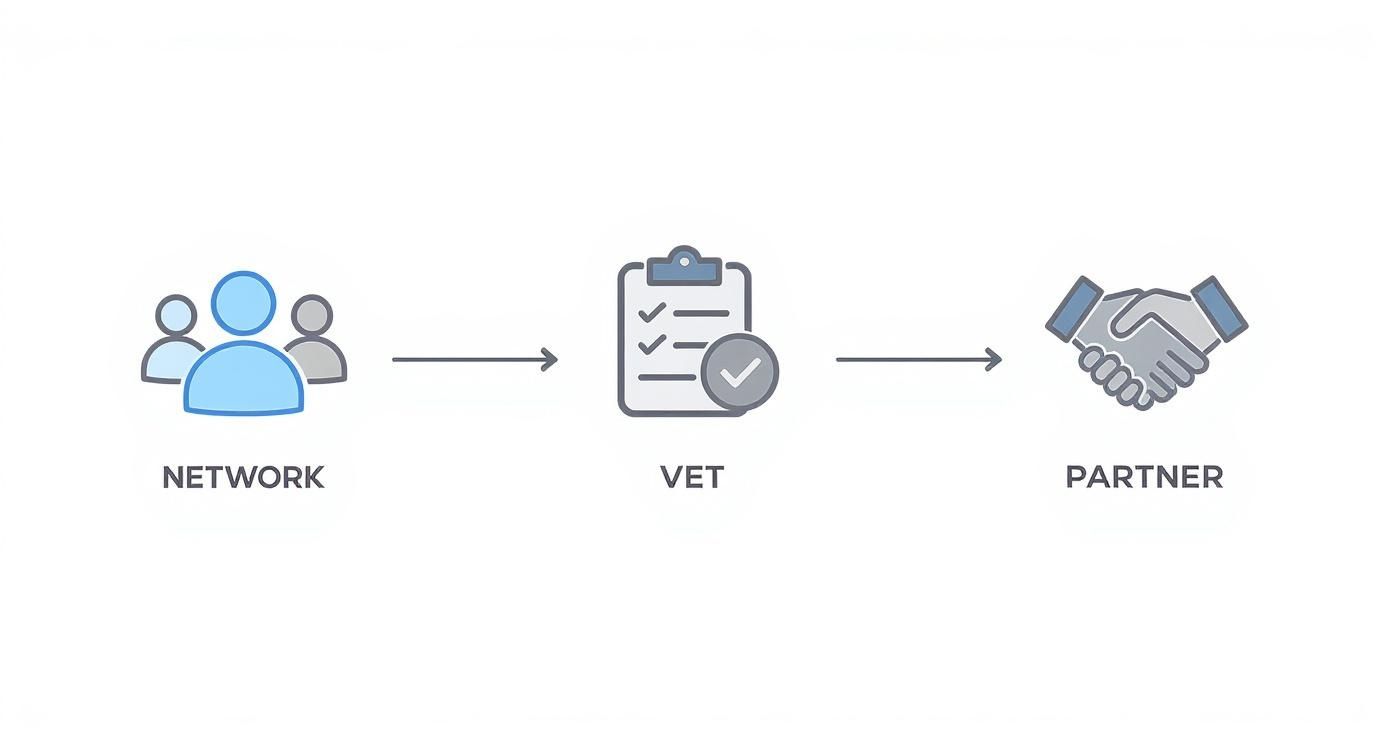
The flow is simple: network, vet, partner. You’re building a relationship, not just filling out a form.
Framing the Deal for a Fast Yes
Beyond the documents, it’s all about how you frame the opportunity. Your application has to radiate confidence and competence. This means having your financial ducks in a row before you even apply.
You’ll need a signed purchase agreement, your entity documents (if you’re buying in an LLC), and proof of funds for your down payment and closing costs. If you’re foggy on the details, check out this resource on what is proof of funds to make sure your bases are covered.
A great application anticipates the underwriter’s questions and answers them before they’re even asked. When they see a meticulously prepared package, it tells them you’re a serious investor who knows how to manage risk.
The lending world has changed. Technology has made things faster and more transparent, which is great news for investors. Closing times have shrunk to as little as 10-14 days, a massive advantage over the 50+ days you’ll wait on a traditional bank. A polished application lets you capitalize on that speed, getting you to the closing table while other investors are still stuck in paperwork limbo.
Navigating the Final Steps to Get Funded
You’ve polished your application and sent it off. Nice work. Now comes the final leg of the race: underwriting and closing. This is where the real action happens, and it’s definitely not the time to check out. Staying engaged now is what separates a smooth closing from a last-minute fire drill.
First up is the lender’s due diligence, which always kicks off with the appraisal. But let’s be clear, a hard money appraisal is a completely different animal than what you’d see with a conventional bank loan.
The All-Important Hard Money Appraisal
A traditional appraiser is obsessed with the property’s “as-is” value—what it’s worth today. A hard money appraiser? They’re focused on the future.
Their entire job is to validate one critical number: the After Repair Value (ARV). This figure is the bedrock of your entire loan, so getting it right is a make-or-break moment for the deal. The appraiser will walk the property, review your scope of work, and check your comps to make sure your vision is actually achievable in the current market. A strong ARV appraisal gives the lender the confidence to fund not just the purchase, but your entire rehab budget.
Beyond the appraisal, the lender’s team starts digging into the finer details. They’ll pull a title report to sniff out any liens or weird ownership claims that could derail the closing. You’ll also need to get a hazard insurance policy lined up (or a builder’s risk policy if it’s a gut job) and make sure the lender is listed as an additional insured.
Think of this stage as a final verification. The lender trusts your plan, but now they need to verify every detail. Having your documents in order and responding to requests quickly is the key to a smooth, fast closing.
Strong investors anticipate these requests. Have your insurance agent’s contact info ready to go. Be prepared to help clear up any minor title issues that might pop up. It’s all about keeping the momentum going.
Understanding Your Costs at Closing
As you get closer to the finish line, you’ll receive the final loan documents and a settlement statement (you might hear it called a HUD-1 or Closing Disclosure). This is your last chance to review every single line item before you sign on the dotted line. If your lender has been upfront with you, there shouldn’t be any surprises here.
Most of these costs are simply deducted from your loan proceeds at closing. Here’s a quick look at what you can expect to see.
Typical Hard Money Loan Cost Breakdown
This table breaks down the common fees you’ll encounter. It’s a good idea to familiarize yourself with these so you know exactly where your money is going.
| Fee Type | Typical Range/Amount | Purpose |
|---|---|---|
| Origination Points | 1-3% of Loan Amount | The lender’s fee for putting the loan together. |
| Underwriting Fee | $500 – $1,500 | Covers the administrative cost of vetting the deal. |
| Appraisal Fee | $500 – $1,000 | Pays for the independent, ARV-focused property appraisal. |
| Title & Escrow Fees | Varies by state | Covers the title search, insurance, and closing services. |
| Attorney Fees | $500 – $2,000+ | For document preparation and legal review. |
Go through these numbers with a fine-tooth comb. If something looks off or doesn’t make sense, ask questions. The goal is to sign with absolute confidence, get your funds, and start turning that property into a profitable winner.
Making Your Hard Money Loan a Success

Getting the funds is just the starting gun. The real work starts now—turning that borrowed capital into a profitable asset. Your ability to manage the project, the loan, and your lender relationship is what separates a one-time deal from a sustainable career.
Think of your loan term as a ticking clock. Every single day counts, so staying on top of your schedule and budget isn’t just a good idea, it’s non-negotiable. This is where that detailed renovation plan becomes your project’s bible.
Mastering Project and Loan Management
Your lender is your partner. Keep them in the loop. This isn’t just a courtesy; it’s smart business. Going dark on your lender is a rookie mistake. Proactive, regular updates on your progress build trust and make everything smoother, especially when you need to request a construction draw.
When it’s time for that draw, you need to be ready. Lenders will send an inspector to verify the work you’re billing for is actually done before they release the next round of funds. A clean draw process keeps your contractors paid and your project from grinding to a halt.
Pro Tip: Document everything with photos. A clear visual record of progress can speed up your draw requests and builds immense trust with your lender. It shows them you’re a professional who runs a tight ship.
A well-managed project also means having a plan for the unexpected. What happens if your plumber finds a cracked sewer line behind a wall? Having a 10-15% contingency fund baked into your budget prevents a minor hiccup from becoming a catastrophic delay. Successful investors don’t avoid problems; they anticipate them. Understanding the specific fix and flip loan requirements from the very beginning helps you structure your budget for exactly these moments.
Nailing Your Exit Strategy
Your exit strategy isn’t something you figure out at the end. It’s a plan you start executing from day one. Every decision you make during the rehab, from the paint colors to the fixtures, should lead directly toward that goal, whether you’re flipping or refinancing.
If you’re planning a flip, this is what that looks like:
- Listing with an Agent Early: Get your real estate agent involved before the final coat of paint is dry.
- Professional Staging and Photos: Don’t skimp here. You need to make the property irresistible the second it hits the market.
- Strategic Pricing: Price it correctly from the start. You want offers fast, not to sit on the market while interest piles up every day.
For a rental, the process is different but just as critical. The whole “BRRRR” method (Buy, Rehab, Rent, Refinance, Repeat) hinges on a seamless transition from your hard money loan to permanent financing. Start talking to conventional lenders or mortgage brokers about refinancing options about halfway through your renovation. They move at a snail’s pace compared to hard money lenders, and you need that process well underway to pay off your loan on time.
The market is also changing as more institutional capital comes into play. We’re seeing more flexible loan products, with terms extending beyond the traditional six months to even several years. This gives savvy investors more breathing room. Successfully executing your exit doesn’t just put profit in your pocket; it builds a track record that gets you better terms and a “yes” on your next deal.
You’ve Got Questions, We’ve Got Answers
Even seasoned pros have questions when they’re diving into a new hard money deal. It’s a different world with its own set of rules, and knowing the inside game is how you win.
Let’s cut through the noise. Here are the straight answers to the questions we hear constantly—not vague theories, but the practical realities you’ll face when you get a hard money loan.
What Credit Score Do I Need for a Hard Money Loan?
Honestly, it’s probably much lower than you think. Hard money lenders are betting on the deal, not your personal financial history. The property’s After Repair Value (ARV) is the main event; your credit score is just a supporting actor.
Sure, a great score never hurts. But most lenders are comfortable with investors in the low 600s. Some will even dip lower if the deal is an absolute slam dunk. What they really care about is your track record, the clarity of your plan, and the property’s raw profit potential.
Can I Use a Hard Money Loan for My Primary Home?
That’s a hard no. There’s no grey area here. Hard money loans are commercial products, period. They are built for business purposes only—investment properties you intend to flip or hold as rentals.
Strict federal regulations like the Dodd-Frank Act exist to protect consumers buying owner-occupied homes. Private lenders aren’t set up to navigate those consumer protection laws, so they stick exclusively to the investment side of the fence. If you’re buying a place to live in, a traditional mortgage is the only way to go.
What Are Points on a Hard Money Loan?
Think of “points” as the lender’s upfront fee for originating the loan. It’s how they get paid for putting the deal together for you.
One point is always 1% of the total loan amount.
So, if a lender quotes you 2 points on a $200,000 loan, you’re looking at a $4,000 fee paid right at the closing table. This cost is completely separate from the interest rate. When you’re comparing offers, you have to look at both the points and the interest rate to see the real cost of your money.
A loan with a lower interest rate but higher points might actually be more expensive on a short-term flip than a loan with a slightly higher rate but lower upfront fees. Always do the math for your specific project timeline.
What Happens If My Project Goes Over Schedule?
The very first thing you do is call your lender. The second you sniff out a potential delay—whether it’s a permit issue or a subcontractor ghosting you—get on the phone. Lenders hate surprises way more than they hate problems.
Hard money loans are built for speed, typically lasting just 6 to 18 months. Blowing past that deadline puts you in a bind.
- Extensions: Many lenders will grant an extension, but it’s going to cost you. You’ll likely pay an extension fee, and sometimes they’ll bump up your interest rate for the extra time.
- Default: If you can’t secure an extension and the loan matures, you’re at risk of default. This is the worst-case scenario. It can trigger foreclosure proceedings, where the lender moves to take the property to get their money back.
This is exactly why your initial timeline needs to be brutally realistic, with a healthy buffer for the curveballs every renovation throws at you. Your best defense against default is a schedule that’s built for reality, not fantasy.
At ACME Real Estate, we believe in arming investors with the knowledge and connections to achieve their goals. Whether you’re hunting for your next flip or need boots-on-the-ground advice on the Los Angeles market, our team is here to guide you. Start your journey with us at https://www.acme-re.com.