
Selling your home yourself, or going the FSBO (For Sale By Owner) route, is a major undertaking. It’s a path that puts you squarely in the driver’s seat, offering the potential to save a nice chunk of change on commissions. But let’s be real—success isn’t as simple as planting a sign in your front yard and hoping for the best. To compete effectively, you’ve got to become a pricing guru, a marketing maverick, a legal eagle, and a negotiation ninja, all rolled into one. It’s a demanding gig that requires a rock-solid game plan.
This guide is that game plan. We’re cutting through the fluff to deliver a clear, actionable roundup of essential for sale by owner tips. You’ll get the real scoop on how to price your home using actual data, create marketing that grabs serious buyers by the collar, navigate the jungle of legal paperwork, and handle negotiations like you’ve been doing it for years. This isn’t about dissing real estate agents—a great one brings incredible value to the table. Our mission is to arm you, the DIY-minded seller, with the specific tools and know-how to manage your own sale and knock it out of the park. If you’re committed to the FSBO path, these insights will help you sidestep common blunders and close the deal like a pro.
1. Price Your Home Competitively Using Comparative Market Analysis
Nailing your home’s price is the single most critical move you’ll make in your FSBO journey. Get it right from day one, and you create buzz, attract serious buyers, and avoid your listing going stale. The most legit way to find that magic number is by conducting a detailed comparative market analysis (CMA). This means digging into recently sold properties in your immediate area that are as similar to your place as possible.

Overpricing is the classic FSBO blunder. It causes your home to sit on the market, forcing you to make price drops that scream “desperate” to buyers. Underprice it, and you’re just leaving your hard-earned equity on the table. A sharp, well-researched price grounded in solid data is your most powerful marketing weapon.
How to Conduct Your Own CMA
Start by pulling data on homes sold within the last three to six months, ideally within a half-mile radius. Zero in on properties that are a close match to yours in terms of:
- Square footage
- Number of bedrooms and bathrooms
- Lot size and age
- Overall condition and recent updates
For example, a homeowner in Austin, TX, crunched the numbers on 15 comparable sales. They priced their 3-bedroom home at a data-backed $425,000 instead of their gut-feeling $450,000. The result? Multiple offers poured in during the first week.
Pro Tip: Online estimators like Zillow’s Zestimate are a decent starting point, but they’re algorithms—they don’t know about your killer kitchen remodel or the worn-out carpeting. Use them as one data point, not the gospel truth.
Actionable Pricing Strategies
- Be a Spy at Local Open Houses: Get a feel for the competition. Check out the condition, layout, and amenities of other homes for sale in your neighborhood to see how yours stacks up.
- Hire a Pro Appraiser: For an unbiased, data-driven valuation, dropping $300-$500 on a professional appraiser is a killer investment. It gives you a defensible price point and major peace of mind.
- Use Smart Price Points: Pricing just under a round number (e.g., $499,000 instead of $500,000) is a classic psychological trick that can get your property seen by more buyers whose search filters top out at the round number.
- Time Your Sale: When you list can impact pricing and demand. Get the skinny on the best time to sell your house for potential seasonal advantages.
- Be Ready to Pivot: If the crickets are chirping after two or three weeks with no serious interest, the market is sending you a signal. Be ready to adjust your price to get back in the game.
2. Invest in Professional Photography and Virtual Tours
In today’s swipe-right real estate market, your home’s online listing is its first showing. With a staggering 97% of homebuyers starting their search online, killer visuals aren’t a luxury; they’re an absolute necessity. Professional photos and virtual tours make your property pop, create a knockout first impression, and can dramatically crank up buyer interest.

This investment, typically running between $200 and $500, is one of the most effective for sale by owner tips you can act on. Crisp, bright photos get more clicks, longer looks, and more requests for showings. Grainy, dark, or cluttered smartphone pics? They’ll get your listing scrolled past faster than a bad dating profile.
How to Maximize Your Visual Marketing
Start by finding a photographer who specializes in real estate. They know the angles, lighting, and tricks to make rooms look spacious and irresistible. Always check their portfolio to make sure their style vibes with your home.
- Photography: A solid package includes 25-35 high-res images covering every room, exterior angles, and key features.
- Virtual Tours: For homes over $400,000, a Matterport 3D tour is a must. It lets buyers “walk through” your home from their couch, creating a much deeper connection.
- Drone Footage: Got a big lot, amazing views, or cool neighborhood spots nearby? Drone shots can be an absolute game-changer.
Case in point: a Denver homeowner used drone footage to show off their property’s mountain views and huge yard. It helped their listing stand out from the crowd and ultimately sold for 4% over ask.
Pro Tip: Book your photoshoot for mid-morning or late afternoon. The natural light is softer and way more flattering. Twilight shots can be pure magic for showcasing landscape lighting and creating a warm, cozy vibe.
Actionable Staging & Photo Prep Strategies
- Declutter Like a Maniac: Your photographer is there to shoot the space, not create it. Clean, declutter, and stage every room before they show up. Ditch personal items like family photos so buyers can picture their own stuff there.
- Let There Be Light: Open every curtain and blind. Turn on every single light in the house—yes, even the lamps and under-cabinet lights. Make it bright and welcoming.
- Show Off the Goods: Make a list of your home’s best assets—that renovated kitchen, the cozy fireplace, custom built-ins—and make sure the photographer nails those shots.
- Plan Your Attack: Talk through a shot list with your photographer. Cover every room, multiple exterior angles (front and back), and any special outdoor features like a patio or pool.
- Get All the Files: Ask your photographer for both web-optimized and high-resolution files. You’ll need them for online listings, print flyers, and other marketing materials.
3. Master the Legal Requirements and Disclosure Obligations
Navigating the legal maze of a real estate transaction is one of the heaviest lifts for an FSBO seller. Handling contracts and disclosures isn’t just about checking boxes; it’s about shielding yourself from future legal drama, avoiding costly delays, and making sure the sale is ironclad. Every state has specific rules about disclosing a property’s condition and known defects, and as the seller, you’re on the hook for complying with Federal Fair Housing guidelines and all local laws.
Failing to disclose a known issue or messing up a contract can blow up your sale at the eleventh hour or, even worse, land you in a lawsuit after closing. Getting a handle on your legal duties provides a solid foundation for a smooth transaction and gives both you and the buyer confidence.
How to Ensure Legal Compliance
Start by tracking down the specific legal forms your state requires. This means the purchase agreement, various disclosure statements (like lead paint, property condition, and natural hazards), and any local addendums. These are legally binding documents, so they need to be filled out with 100% accuracy and honesty.
For instance, a Michigan seller properly disclosed some past basement flooding and provided receipts for the waterproofing repairs they’d made. This transparency built major trust with the buyer, who felt confident and closed at the full asking price.
Pro Tip: Your state’s real estate commission or department of commerce website is your go-to source for official, mandatory disclosure forms. Download them directly to make sure you’re using the latest and most compliant versions.
Actionable Legal Strategies
- Lawyer Up: For $500 to $1,500, a real estate attorney can review contracts, check your disclosures, and guide you through closing. This is hands-down one of the smartest investments you can make in your FSBO sale.
- Disclose, Disclose, Disclose: When in doubt, spell it out. It’s way better to be upfront about a past issue you’ve fixed than for a buyer to uncover it later. Honesty is your best shield against future legal trouble.
- Keep Killer Records: Maintain a file with all receipts, warranties, and paperwork for repairs, renovations, and major appliance maintenance. Handing this over to a buyer backs up your disclosures.
- Use State-Approved Templates: Snag state-specific, attorney-approved purchase agreement templates from reputable legal resource sites to ensure your contract is solid.
- Get Title Insurance: Both you and the buyer need title insurance. It protects everyone from surprise claims or defects in the property’s title history, ensuring a clean transfer of ownership.
4. Maximize Exposure Through Strategic Multi-Platform Marketing
Without an agent’s network and instant MLS access, your main job as an FSBO seller becomes Chief Marketing Officer. Success demands a proactive, multi-channel marketing blitz to get your home in front of as many qualified buyers as possible. This means thinking bigger than a yard sign and creating a professional, consistent vibe across a mix of digital and traditional channels.
Casting a wide net is everything. By blending online listing sites, social media buzz, and smart local outreach, you create multiple ways for buyers to find your property. A unified approach with top-notch photos and consistent messaging makes your home stand out and builds credibility with serious house hunters.
How to Build Your FSBO Marketing Engine
Your mission is to replicate—and maybe even improve upon—the exposure an agent provides. Start with a foundation of high-traffic online listings and expand from there.
- Online Listing Platforms: Your first move should be listing on the big real estate sites. Zillow and Trulia offer free FSBO listings, which are non-negotiable for reaching the vast majority of online searchers.
- Social Media Hustle: Use platforms like Facebook Marketplace and Instagram. Share your listing in local community groups and neighborhood pages to hit geographically relevant buyers. Remember to describe the property’s features, not the potential buyers, to adhere to Fair Housing laws.
- Old-School Methods: Don’t sleep on the power of a professional yard sign with a weatherproof flyer box. It grabs the attention of people who are already sold on your specific neighborhood.
For instance, an Arizona homeowner built a simple property website with a slick virtual tour. They shared it on LinkedIn and ended up finding a buyer through a professional contact who saw the post.
Pro Tip: Consistency is king. Use the same amazing photos, detailed description, and contact info on every single platform. This creates a cohesive, professional brand for your property and builds trust from the first click.
Actionable Marketing Strategies
- Buy a Flat-Fee MLS Listing: For a fee of $99-$500, these services get your home on the local MLS. This is one of the most powerful for sale by owner tips because it blasts your listing out to thousands of agent websites and major portals like Realtor.com.
- Leverage Local Social Groups: A Boston seller posted their listing in 15 different neighborhood Facebook groups. They promoted their open house exclusively through these groups, driving huge traffic and sparking a bidding war.
- Build a Simple Property Website: Use a service like Wix or Squarespace ($15-$25/month) to create a central hub for your home with more photos, your virtual tour, and more detailed info than standard listings allow.
- Host a Killer Open House: Use your multi-platform strategy to drive traffic to a weekend open house. Promoting it online and with clear signs can generate serious buzz. For a great impression, get some expert advice on open house tips for sellers before the big day.
- Refresh Your Listings: Tweak your online listings weekly, even with a minor change to the description. This can signal to algorithms that the listing is active, potentially bumping it up in search results.
5. Prepare Your Home with Strategic Staging and Repairs
First impressions are everything in real estate, and as an FSBO seller, your property has to hang with the professionally prepped, agent-listed homes. Strategic staging and smart repairs are your secret weapons for creating an emotional gut-punch with buyers the second they walk through the door. This isn’t about bank-breaking renovations; it’s about decluttering, depersonalizing, and arranging your home to flaunt its best features and maximize its sense of space.
Investing in presentation pays off, big time. Most industry pros agree that spending just 1-3% of your home’s value on smart repairs and staging can yield a return of 5-15% on the final sale price. Well-presented homes don’t just sell for more; they sell faster, saving you the carrying costs and stress of a listing that just sits there.
How to Prepare Your Home for Sale
Start by looking at your home through a buyer’s eyes. You’re no longer decorating for yourself; you’re merchandising a product. Your goal is to create a clean, inviting, neutral backdrop where buyers can easily picture their own lives unfolding.
- Declutter and Depersonalize: Get rid of at least half of your furniture and belongings. This means packing up family photos, collections, and extra decor. The goal is to make rooms feel bigger and more open.
- Deep Clean Everything: From baseboards to ceiling fans, every surface needs to sparkle. A professional deep clean ($200-$400) is one of the highest-return investments you can make.
- Tackle Obvious Repairs: Fix that leaky faucet, patch nail holes, replace that cracked tile, and make sure all windows and doors work smoothly. These small fixes stop buyers from getting distracted and wondering what other problems might be hiding.
For instance, a Dallas FSBO seller spent $2,800 on staging and minor cosmetic fixes. That strategic investment helped them sell for $15,000 above their initial target price in just three weeks.
Pro Tip: Don’t forget about curb appeal. A New Jersey homeowner invested $1,200 in landscaping, power washing, and a new mailbox, and saw a 40% jump in showing requests. Your home’s exterior is the very first impression.
The following decision tree can help you figure out how to allocate your budget for staging and repairs to get the biggest bang for your buck.
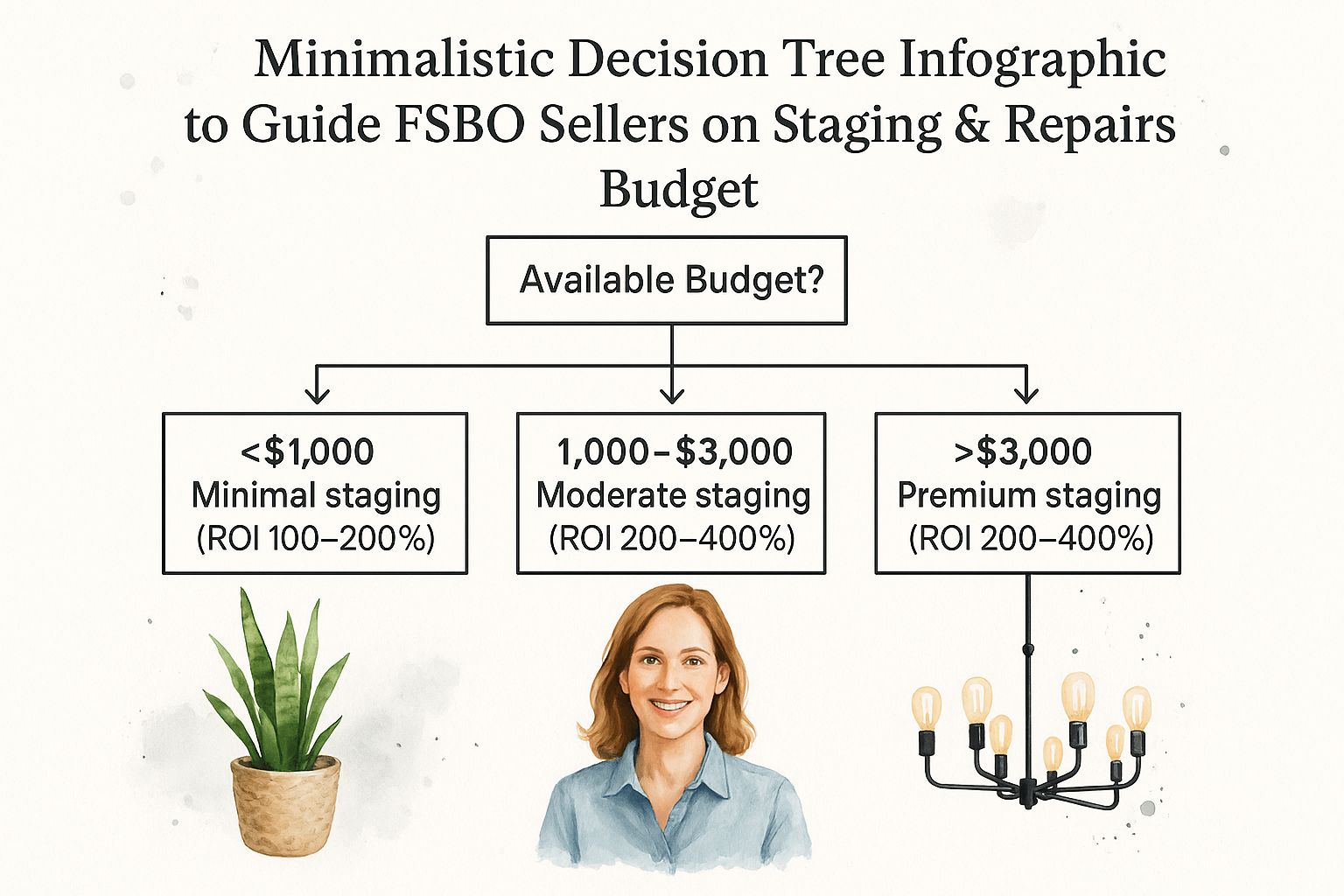
This flowchart shows that even a small budget under $1,000 can deliver a significant return, while a more moderate investment can seriously amplify your results.
Actionable Staging Strategies
- Paint with Neutral Colors: A fresh coat of paint in a neutral shade like greige, beige, or off-white is a cheap, high-impact update that appeals to almost everyone.
- Modernize Fixtures: Swap out dated light fixtures and cabinet pulls for modern, inexpensive ones. This can totally transform a kitchen or bathroom for a few hundred bucks.
- Focus on Key Rooms: Put your budget where it counts the most: the living room, kitchen, and primary bedroom.
- Boost Curb Appeal: To make sure your home shines, don’t ignore the outside; consider investing in quality professional pressure washing services for your driveway, siding, and walkways.
- Set the Scene for Showings: Open all the blinds, turn on all the lamps, and use a subtle, fresh scent. Hide all evidence of pets during showings. For a deeper dive, learn more about how to stage a home for maximum impact.
6. Develop Effective Buyer Screening and Showing Management
As a FSBO seller, you’re the gatekeeper. You’ll be handling all the buyer inquiries, scheduling viewings, and leading the tours—roles an agent typically manages. Effective screening is one of the most vital for sale by owner tips because it protects your time and safety while ensuring you only deal with serious, qualified buyers. Having a system makes you look like a pro, encourages legit offers, and keeps your sale moving forward.

Without a process, you risk wasting hours on “looky-loos” or, worse, putting your safety at risk. A structured screening and showing plan lets you stay in control, vet potential buyers like a boss, and show off your home in its best light. This professionalism builds trust and signals to buyers that they’re dealing with someone who knows what they’re doing.
How to Screen Buyers and Manage Showings
Set up your system before your listing goes live. Decide what info you need upfront and how you’ll manage your calendar. The goal is to be firm but fair, respecting Fair Housing laws while making sure every person who walks through your door is a potential buyer, not just a nosy neighbor.
For example, a Virginia FSBO seller created a simple pre-screening form that required buyers to provide a mortgage pre-approval letter. This one move cut down on unqualified showings by 70% and led to a solid offer within two weeks from a properly vetted buyer.
Pro Tip: A mortgage pre-approval is way stronger than a pre-qualification. Pre-approval means a lender has actually verified the buyer’s financials (income, debt, credit), while pre-qualification is often just a rough guess based on what the buyer told them.
Actionable Screening and Showing Strategies
- Require Pre-Approval: Politely insist on seeing a mortgage pre-approval letter or proof of funds for cash offers before you book a private showing. This is standard practice in the industry.
- Use a Scheduling Tool: Manage your time with free tools like Calendly. It cuts out the endless back-and-forth emails and makes you look super organized. A California homeowner used this to control their schedule and impress buyers.
- Host Block Showings: Instead of random appointments all week, schedule showings in two-hour blocks on a Saturday or Sunday. This creates a sense of urgency and buzz as buyers see other people checking out the property.
- Never Show Alone: Your safety is number one. Always have a partner, friend, or neighbor with you during showings.
- Prep an Info Packet: Have a folder ready with property disclosures, utility cost history, tax records, and a list of recent upgrades. An Ohio seller found that 80% of viewers who got a packet asked for a second showing.
- Follow Up Fast: Send a quick thank-you email within 24 hours of a showing and ask for feedback. This keeps the conversation going and gives you valuable insight into what the market is thinking.
7. Navigate Negotiations and Offers with Confidence
Getting an offer is a thrill, but this is where the real work begins. Successfully navigating negotiations demands a strategic mind, a crystal-clear understanding of contract terms, and the ability to see beyond the sticker price. Handling this stage like a champ protects your bottom line and keeps a good deal from going sideways.
This isn’t just about haggling over the price; it’s about dissecting every part of an offer to understand its true strength. A lower-priced offer with fewer strings attached and solid financing can often be worth more than a higher offer riddled with risk. Mastering these for sale by owner tips for negotiation ensures you don’t leave cash on the table or accept a deal that’s doomed to fail.
How to Evaluate and Negotiate Offers
The key is to look at each offer as a whole package. You need to weigh every part to determine its real appeal and how likely it is to actually close. Pay close attention to:
- Contingencies: Things like financing, appraisal, and home inspection. Fewer contingencies mean a smoother ride to closing.
- Financing Type: A conventional loan or cash offer is typically stronger than an FHA or VA loan, which can have stricter appraisal rules.
- Earnest Money: A bigger deposit (usually 1-3% of the purchase price) shows a buyer is serious and committed.
- Timeline: A proposed closing date that works for your schedule is a huge plus.
For example, a Georgia FSBO seller got three offers. Instead of just grabbing the highest one, they paid an attorney $750 to review them. They ended up accepting the middle offer because it had strong conventional financing and no home sale contingency, leading to a stress-free closing in 30 days.
Pro Tip: One of the smartest moves you can make is hiring a real estate attorney for a flat fee ($500-$1,500) to review offers, draft counter-offers, and make sure your purchase agreement is bulletproof. It’s professional legal backup for a fraction of a traditional commission.
Actionable Negotiation Strategies
- Respond Quickly: Acknowledge every offer within 24-48 hours to keep buyers engaged and maintain a professional vibe. But never accept an offer on the spot; always sleep on it.
- Counter Strategically: Keep counter-offers to one or two rounds. Endless back-and-forth can cause deal fatigue and make you seem difficult.
- Request an Escalation Clause: If you think you’ll get multiple offers, ask buyers to include an escalation clause that automatically bumps their bid over competing offers up to a set cap.
- Negotiate Repair Credits: An Illinois homeowner successfully negotiated a $5,000 credit for inspection items instead of doing the repairs themselves. This made the buyer happy and let the seller keep control of their timeline.
- Set Repair Thresholds: Specify in your counter-offer that you’ll only address major structural or safety issues, or repairs costing more than a set amount (e.g., $500).
- Use Addendums: Make sure any agreements made outside the main contract, like including that cool patio furniture, are documented in a formal addendum signed by both you and the buyer.
7-Point For Sale By Owner Tips Comparison
| Strategy | Implementation Complexity 🔄 | Resource Requirements ⚡ | Expected Outcomes 📊 | Ideal Use Cases 💡 | Key Advantages ⭐ |
|---|---|---|---|---|---|
| Price Your Home Competitively Using CMA | Moderate – requires market research | Moderate – online tools & possible appraisal | Maximizes offers and reduces time on market; competitive bidding | Sellers with market knowledge and time | Attracts serious buyers; maximizes negotiating position |
| Invest in Professional Photography and Virtual Tours | Moderate to High – scheduling and prep | Moderate – $200-$800 for services | 60-90% more inquiries; faster sales; stronger first impressions | Sellers focusing on online visibility | Increases listing views; sells 32% faster on average |
| Master Legal Requirements and Disclosure Obligations | High – complex, state-specific laws | Moderate to High – possible attorney fees $500-$1,500 | Avoids litigation; builds trust; ensures compliance | Sellers unfamiliar with legal processes | Protects from lawsuits; professional credibility |
| Maximize Exposure Through Multi-Platform Marketing | High – managing multiple channels | Moderate – flat-fee MLS ($99-$500) plus time | Broader buyer reach; professional multi-channel presence | Sellers willing to actively market themselves | Reaches diverse audiences; tracks lead sources |
| Prepare Your Home with Staging and Repairs | Moderate to High – physical prep required | Moderate to High – $500-$6,000+ staging/repairs | Faster sales; higher sale price (5-15% ROI); better buyer perception | Sellers aiming to boost appeal and value | Homes sell faster; reduces buyer objections |
| Develop Buyer Screening and Showing Management | Moderate – organizational effort | Low to Moderate – scheduling tools, prep time | Focuses on qualified buyers; protects safety; professional experience | Sellers managing showings alone | Saves time; protects seller; gathers useful feedback |
| Navigate Negotiations and Offers with Confidence | High – requires contract and negotiation skills | Moderate – possible attorney fees $500-$1,500 | Better deal terms; smoother closing process; protects seller interests | Sellers confident in negotiation or with legal help | Full control over negotiations; cost savings vs agent fees |
Your Next Move: Crossing the Finish Line
The journey of selling your home without a real estate agent is a significant undertaking, one that puts you squarely in the driver’s seat of a major financial transaction. From conducting a data-driven comparative market analysis to mastering the intricate legal disclosures, each step you’ve learned about is a critical component of a successful For Sale By Owner (FSBO) strategy. This isn’t just about putting a sign in your yard; it’s about executing a sophisticated business plan where you are the CEO.
The power of this approach lies in your control and potential savings, but that power is earned through diligence. Your most important takeaway should be this: preparation is the great equalizer. When you invest the time to stage your home strategically, capture it with professional-grade photography, and market it across multiple platforms, you are competing on a professional level. You move from being a homeowner simply selling a house to a savvy marketer closing a high-stakes deal.
Key Pillars of a Successful FSBO Sale
Remember to ground your efforts in these core principles:
- Objective Pricing: Your home’s value is determined by the market, not emotion. Stick to the data from your CMA.
- First Impressions are Everything: Professional photos and a meticulously staged home are non-negotiable investments that attract serious buyers.
- Legal Diligence: Protect yourself by understanding and fulfilling all disclosure requirements and using legally sound contracts. Don’t guess-know.
- Confident Negotiation: You’ve done the research. You know your home’s value and your bottom line. Negotiate from this position of strength and clarity.
Mastering these for sale by owner tips is what separates a smooth, profitable sale from a frustrating, costly ordeal. While the DIY path offers immense rewards, it also demands accountability. The responsibility for pricing, marketing, legal compliance, and negotiation rests entirely on your shoulders. It’s a challenge, but one you are now far better equipped to handle.
Ultimately, the FSBO path is about making an informed choice. You’ve armed yourself with the knowledge to manage the process effectively. If you find yourself needing an expert opinion on a contract or feel overwhelmed by negotiations, seeking targeted professional help is not a failure-it’s a smart business move. Whether it’s a flat-fee consultation with a real estate attorney or deciding to pivot to a brokerage, you are in control. You have the insight to decide what’s best for you, your property, and your financial future. Congratulations on taking charge of your sale.
Feeling empowered but want a professional partner to ensure a seamless closing? The team at ACME Real Estate specializes in providing flexible support for savvy homeowners like you, from consultation to full-service representation. Explore how we can help you achieve your goals at ACME Real Estate.