
Let’s cut through the noise. Finding a killer wholesale deal boils down to a few core strategies that actually work. The secret isn’t some guru’s magic formula; it’s about mastering the fundamentals: driving for dollars, digging into public records, and building a real, boots-on-the-ground local network.
These aren’t just buzzwords. They’re the tried-and-true methods for uncovering hidden gems before they ever hit the MLS.
Your Playbook for Finding Wholesale Deals
Jumping into wholesaling can feel like drinking from a firehose. I get it. But success isn’t about chasing every shiny object. It’s about building a repeatable system to find undervalued properties with motivated sellers, then connecting them to your network of cash buyers for a tidy profit.
This is where you shift from hoping for a deal to creating a predictable pipeline of them. It’s a mindset change. You need to become part detective, part networker, and a sharp negotiator, all while learning to spot value where everyone else just sees a mess.
What Makes a Great Wholesale Opportunity?
Before we get into the “how,” let’s lock down the “what.” A perfect wholesale property isn’t just any old house with a for-sale sign. It has a very specific DNA.
You’re hunting for properties that are:
- Off-Market: These are the hidden deals, the properties not publicly listed for sale. No Zillow, no Redfin. This is where you find gold because you’re not competing with every other buyer in the city.
- Owned by a Motivated Seller: The homeowner has a real, pressing reason to sell now. Maybe they’re facing foreclosure, just inherited a property they don’t want, or are just plain tired of being a landlord. Their motivation is your opportunity.
- Priced Below Market Value: This is non-negotiable. The property needs enough equity baked in to cover your wholesale fee and still leave plenty of meat on the bone for your end buyer to make a profit after renovations.
Of course, finding these sellers is just the first step; reaching out to them is a skill in itself. If you’re new to making that first contact, check out a comprehensive guide to cold outreach to sharpen your approach.
At its core, wholesaling is problem-solving. You’re not just finding a house; you’re finding a homeowner with a problem you can solve. Your offer of a fast, all-cash closing is the solution they need. Internalizing this is what separates the pros from the amateurs.
Spotting Deals from Behind the Wheel

Alright, time to hit the pavement. Some of the juiciest off-market deals aren’t buried in some complex database—they’re sitting right there in plain sight, just waiting for someone to notice.
“Driving for dollars” is a classic, boots-on-the-ground technique that just plain works. It puts you directly in the neighborhoods you want to invest in, giving you an edge that screen-scrollers will never have.
This isn’t about aimless joyrides through tony suburbs. It’s a methodical hunt for properties that are screaming for attention, showing clear signs of neglect or vacancy. These are the tell-tale clues that a homeowner might be motivated, overwhelmed, and ready to sell. You’re basically training your eye to see a killer opportunity where everyone else just sees a rundown house.
Tuning Your Deal-Spotting Radar
Success out here starts with knowing exactly what you’re looking for. You’re on the hunt for visual cues that tell a story of potential distress or an owner who’s just tired of it all. These subtle signs are often the very first breadcrumb on the trail to a great wholesale property.
Keep your eyes peeled for a mix of these red flags:
- Overgrown Landscaping: I’m talking weeds completely taking over the lawn, bushes so wild they’re blocking windows, or huge dead patches of grass. It’s a classic sign that nobody is keeping up with the place.
- Visible Exterior Damage: Think peeling paint, boarded-up windows, a roof that’s clearly sagging, or gnarly cracks in the foundation. These aren’t just cosmetic flaws; they often point to bigger problems the owner can’t—or won’t—fix.
- Signs of Vacancy: An overflowing mailbox is a dead giveaway. So are newspapers piling up on the porch or a utility shut-off notice slapped on the door.
Spotting these details is your first real step toward building a lead list that’s actually worth something.
From Drive-By to Deal Pipeline
Finding a potential property is just the beginning. The real magic happens when you turn that quick observation into an actual, actionable lead. And please, forget scribbling addresses on fast-food napkins. You need a system.
First, be strategic with your routes. Don’t just wander around. Pick a few target neighborhoods and drive every single street, methodically, like you’re mowing a lawn. This makes sure you don’t miss that perfect deal tucked away on some quiet side street.
The real goal of driving for dollars isn’t to find just one house. It’s to build a repeatable system that consistently pumps out quality leads. Consistency crushes intensity every single time in this business.
As you’re driving, use an app like DealMachine or the PropStream mobile app. These tools are game-changers. You can instantly log addresses, snap photos, and even pull up owner information right there on the spot.
This tech takes what used to be a messy process and makes it clean and organized. Once you have this curated list, you’re ready for the next phase: digging into the owner’s situation and kicking off your outreach.
Uncovering Leads with Public Records

There is a lot of data from ownership history to tax records that is publicly available on any single property. This isn’t just noise; it’s a goldmine. Tapping into this information is how you stop hoping for deals to fall in your lap and start building a predictable pipeline of off-market opportunities.
Digging into County Records
Some of the strongest leads are hidden in plain sight, tucked away in county databases. This is where you get to play digital detective. Local county websites are treasure troves of information on homeowners facing specific challenges, and those challenges often translate into a high motivation to sell.
You’re not just looking for names; you’re looking for stories that signal a problem you can solve with a quick, fair cash offer. These are the lists that matter most:
- Pre-Foreclosures: A homeowner who just received a notice of default is on a tight deadline. They’re often eager to sell and avoid having a full foreclosure stain their record.
- Tax Delinquencies: People falling behind on property taxes are usually in a serious financial bind. A fast sale can be the lifeline they need to settle their debt and move on.
- Probate Filings: When a homeowner passes away, the heirs rarely want to become landlords or property managers, especially from out of state. They just want to liquidate the asset quickly.
- Code Violations: Think properties with unpermitted additions, structural issues, or neglect. These can overwhelm an owner who doesn’t have the cash or energy for massive repairs.
Using Data Platforms to Filter for Gold
Now, you could spend your days manually pulling lists from county websites. It works, but it’s a grind. This is where specialized data platforms become an absolute game-changer for finding wholesale properties.
Services like PropStream and ListSource are built for investors like us. They pull all that public data into one place, letting you build hyper-targeted marketing lists with insane precision. You can stop blasting generic mailers and start pinpointing properties with a specific combination of motivating factors.
The real magic isn’t just finding one type of distress; it’s in “list stacking.” This is where you find properties that show up on multiple lists. Imagine finding a vacant property with high equity whose owner lives out of state and is also behind on taxes. The more layers of motivation, the better your odds of closing a deal.
To take your analysis to the next level, start paying attention to commercial real estate trends. What’s happening in the industrial, retail, and office markets often predicts where residential opportunities will pop up next. As you learn more about how to research property history, you’ll see how these bigger market shifts can point you toward the next hotspot.
By tracking commercial permits and local job growth (check out NAR’s commercial market insights for a broader view), you can find neighborhoods ripe for off-market deals before everyone else catches on.
Building a Network That Feeds You Deals

Let’s be real—data platforms and public records are great, but they will never replace the human side of this business. Wholesaling is a relationship game, first and foremost. Your most valuable asset isn’t a list of addresses; it’s a rock-solid network of professionals who can feed you a steady stream of deals long before they hit anyone else’s radar.
This is how you get the inside track. It’s about building genuine partnerships with people who are on the front lines, bumping into motivated sellers every single day as part of their job.
Think of it this way: a probate attorney is dealing with heirs who just want to liquidate an inherited property, fast. A burnt-out landlord vents to their property manager about wanting out. A contractor gets a call for a massive repair job the owner can’t possibly afford. When you’re the first person they think to call, you’ve won the networking game.
Forging Your Deal-Flow Alliance
Your mission is to become the go-to problem solver for a handful of key professionals. This isn’t about just handing out business cards; it’s about providing real value so that helping you becomes a win for them, too. They need a reliable, fast-acting buyer to solve their clients’ problems, and you need consistent deal flow. It’s a perfect match.
Start building bridges with these key players:
- Probate and Divorce Attorneys: They’re ground zero for clients in tough situations who often need to sell property quickly and without the usual headaches.
- Property Managers: These pros are the first to know when a landlord is tired of dealing with tenants and toilets and is ready to cash out.
- Contractors and Tradespeople: Plumbers, roofers, and electricians see properties in serious distress. They know when an owner is overwhelmed by repair costs.
- Real Estate Agents: Partnering with real estate professionals can be a powerful strategy. Many agents have access to off-market leads or pocket listings that could be a perfect fit for a wholesale transaction. Building a strong rapport with them can open up a valuable deal pipeline.
The secret to making these relationships stick is simple: be reliable and make them look good. When you say you can close a deal, you close it. No exceptions. Your reputation for being a dependable problem-solver is the most powerful marketing tool you have.
Tapping into the Investor Community
Your professional network is crucial, but don’t sleep on your peers. Connecting with other investors at local Real Estate Investor Association (REIA) meetups or in online forums is a non-negotiable. These are the people who get the hustle.
Going to these events isn’t just for finding deals; it’s about building your reputation and finding the cash buyers for the properties you get under contract. The person you grab coffee with at a meetup today could be the buyer for your next three deals.
A strong network generates referrals, partnerships, and market insights that no database can ever provide. It’s your unfair advantage.
Using Market Data to Find Hotspots
Locking up a property with a motivated seller feels like a huge win, but it’s only half the game. If that house is in a neighborhood where cash buyers have gone extinct, your deal is dead before it even starts. This is where market analysis becomes your unfair advantage, letting you zero in on specific submarkets with real, active demand.
Forget the shotgun approach of blanketing the city with expensive marketing. Smart wholesaling is surgical. It’s about getting granular with hyperlocal data to find pockets where properties are flying off the market, cash deals are the norm, and inventory is thin. This data-first mindset tells you exactly where your marketing dollars will do the most good.
Reading the Market’s Tea Leaves
To find these hotspots, you have to look past the city-wide headlines and focus on a few key metrics at the zip code level. These numbers tell the real story about local market health and investor appetite.
Here’s what to track religiously:
- Average Days on Market (DOM): A low DOM is your best friend. It means properties are getting snapped up fast, signaling strong buyer demand and a market that’s moving quickly enough for a fast assignment.
- Inventory Levels: When you see low inventory combined with high demand, you know buyers are competing. That’s the perfect storm for a wholesaler. Your contract instantly becomes a valuable, sought-after asset.
- Cash Sales Percentage: This is the most direct signal of investor activity. A high percentage of recent all-cash sales is concrete proof that flippers and landlords are actively deploying capital in that area.
The real magic isn’t just low inventory; it’s the tension between supply and demand. That’s what creates the perfect conditions for a profitable wholesale deal. You can dig deeper into what makes a great wholesale market by exploring the top locations at doubleclose.com.
Turning Data into Deals
Once you’ve got a handful of promising neighborhoods based on the numbers, it’s time to connect the dots. Start cross-referencing these areas with your distressed property lists. Do you see a cluster of pre-foreclosures in a zip code with a 21-day average DOM? That’s a massive green light.
This is how you stop guessing and start building an intelligent, targeted strategy. You’re using hard evidence to guide your efforts. This analytical edge is non-negotiable in a diverse market.
When you operate this way, by the time you get a property under contract, you already know the buyer demand is there waiting for it. That simple fact dramatically increases your odds of a quick and profitable assignment.
How to Run the Numbers on a Wholesale Deal
Finding a trashed, off-market property is the easy part. The real work—and where most new wholesalers crash and burn—is running the numbers. Get this wrong, and you’ll torch your credibility with cash buyers and lose your shirt in the process.
This entire business boils down to two key metrics: the After Repair Value (ARV) and your Maximum Allowable Offer (MAO). The ARV is what a house could be worth after a flipper brings it back to life. The MAO is the absolute highest number you can offer the seller and still leave enough meat on the bone for everyone.
Nailing the After Repair Value
To get a realistic ARV, you need to find solid “comps,” or comparable sales. These are recently sold homes that are practically twins to your subject property in terms of size, style, age, and, most importantly, location. Think same subdivision, not just the same zip code.
Your comps need to be tight. Here’s what to look for:
- Sold in the last 90 days: Anything older is stale data and doesn’t reflect what the market is doing right now.
- Similar square footage: Stick to properties within 10-15% of your target property’s size.
- Identical bed/bath count: A 3-bed, 2-bath house is a completely different asset than a 4-bed, 3-bath. Don’t mix them.
The best data comes straight from the MLS, so buddy up with a real estate agent. If you’re just starting, you can get a rough idea from sites like Zillow or Redfin, but you absolutely must filter for sold properties. Active listings are just wishful thinking.
The Wholesaler’s Formula for Success
Once you have a defensible ARV, you can plug it into the formula that every serious investor uses. This isn’t just about your profit; it’s about protecting your buyer’s profit, which is how you get repeat business.
MAO = (ARV x 70%) – Estimated Repairs – Your Wholesale Fee
That 70% rule of thumb gives your end buyer a 30% cushion to cover their financing, holding costs, closing fees, and, of course, their profit. Your repair estimate doesn’t need to be a contractor-level bid, but it can’t be a wild guess. Walk the property and add up the big-ticket items—roof, HVAC, kitchen, baths. Be honest. Be realistic.
Finding the right deals requires the same disciplined approach: you analyze the market, identify opportunities, and focus your efforts.
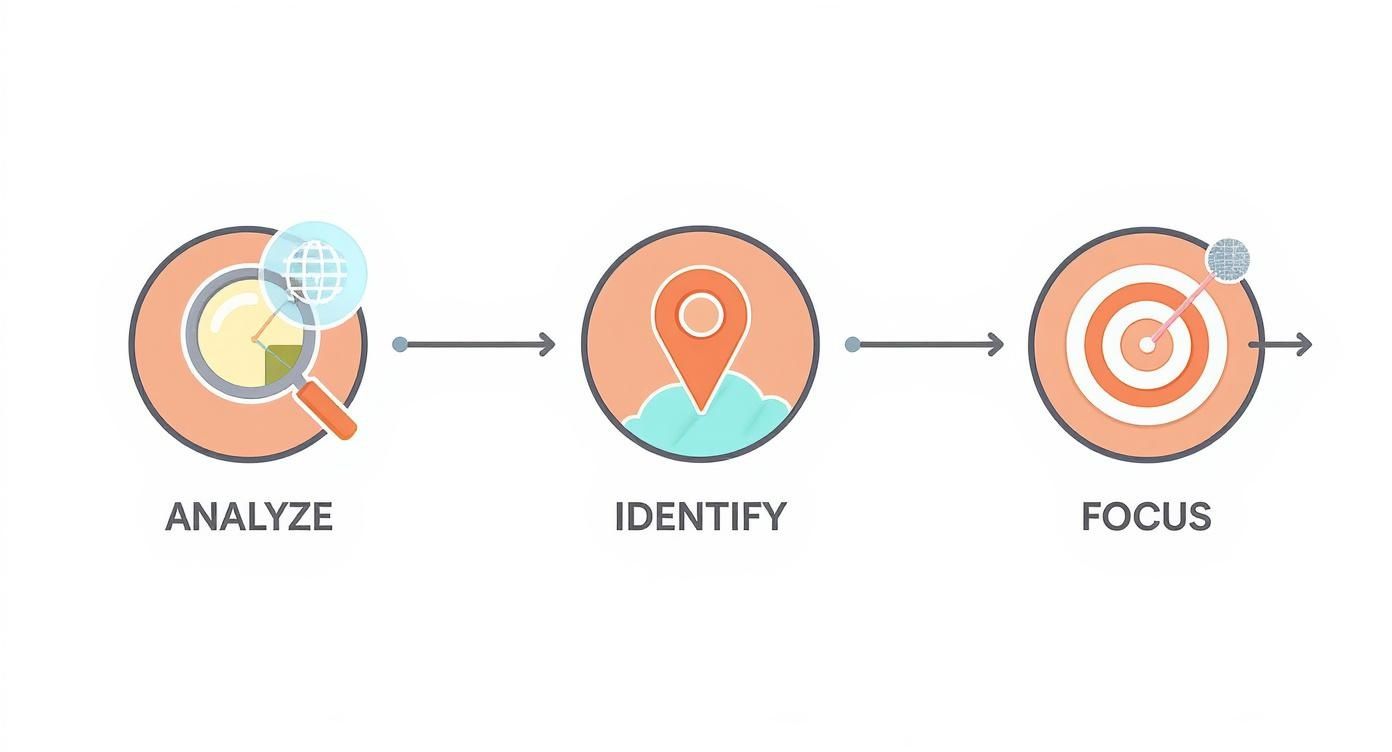
This systematic process—whether you’re picking a neighborhood or calculating an offer—is what separates the pros from the hobbyists.
In today’s market, getting your numbers right is more critical than ever. According to research from J.P. Morgan, the US housing market is looking at pretty flat growth—only about 3% is forecasted for home prices through 2025. You can read more about these U.S. housing market projections yourself. With margins that thin, there’s zero room for error. You have to be laser-focused on local trends like days on market and how many cash buyers are actively hunting in your area.
Got Questions? We’ve Got Answers
When you’re new to wholesaling, a lot of questions pop up. It can feel like you’re trying to navigate a legal minefield, but it’s really more like a straightforward business process with a few key rules. Let’s cut through the noise and get you some real answers to the questions we hear all the time from new investors.
Is Wholesaling Legal in California?
Yes, it’s 100% legal in California—as long as you do it the right way. The critical distinction is that you are selling your contractual rights to buy a property, not the property itself. This is what separates a wholesaler from an unlicensed real estate agent.
To keep everything above board, transparency is non-negotiable. Your contract with the seller has to spell out that you have the right to assign it to another buyer. That single clause is what keeps you compliant and ensures you’re playing by the rules. It’s that simple.
Do I Need a Real Estate License?
Nope, you don’t need a real estate license to wholesale in California. That said, having one definitely gives you a leg up, like getting direct MLS access to pull your own comps instead of relying on someone else.
Without a license, you cannot collect a commission. Your profit is the assignment fee, which is just the spread between what you agreed to pay the seller and the final price your end buyer pays. Getting this right is crucial—it’s the foundation of a legal wholesale transaction.
The core principle is this: you’re a principal in the deal. You’re securing a property under contract for yourself, with the goal of selling that contract. You aren’t representing anyone else for a fee.
How Much Money Do I Really Need to Start?
This is why so many people get into wholesaling in the first place. Unlike flipping or buying rentals, the barrier to entry is incredibly low. You’re not trying to scrape together hundreds of thousands for a down payment.
Your main expense is going to be marketing to find motivated sellers. That could be anything from a couple hundred bucks for a targeted direct mail campaign to a monthly subscription for data software. The beauty of this model is that your first deal can easily fund your marketing for the next six months, creating a business that pays for itself.
Ready to stop wondering and start doing? If you want to find your first wholesale deal, the team at ACME Real Estate has the boots-on-the-ground knowledge to get you there. Contact us today and let’s start building your real estate business.
 ACME Real Estate | Los Angeles Boutique Real Estate Brokerage